Professional Skills
Preparation for MA Degree Show
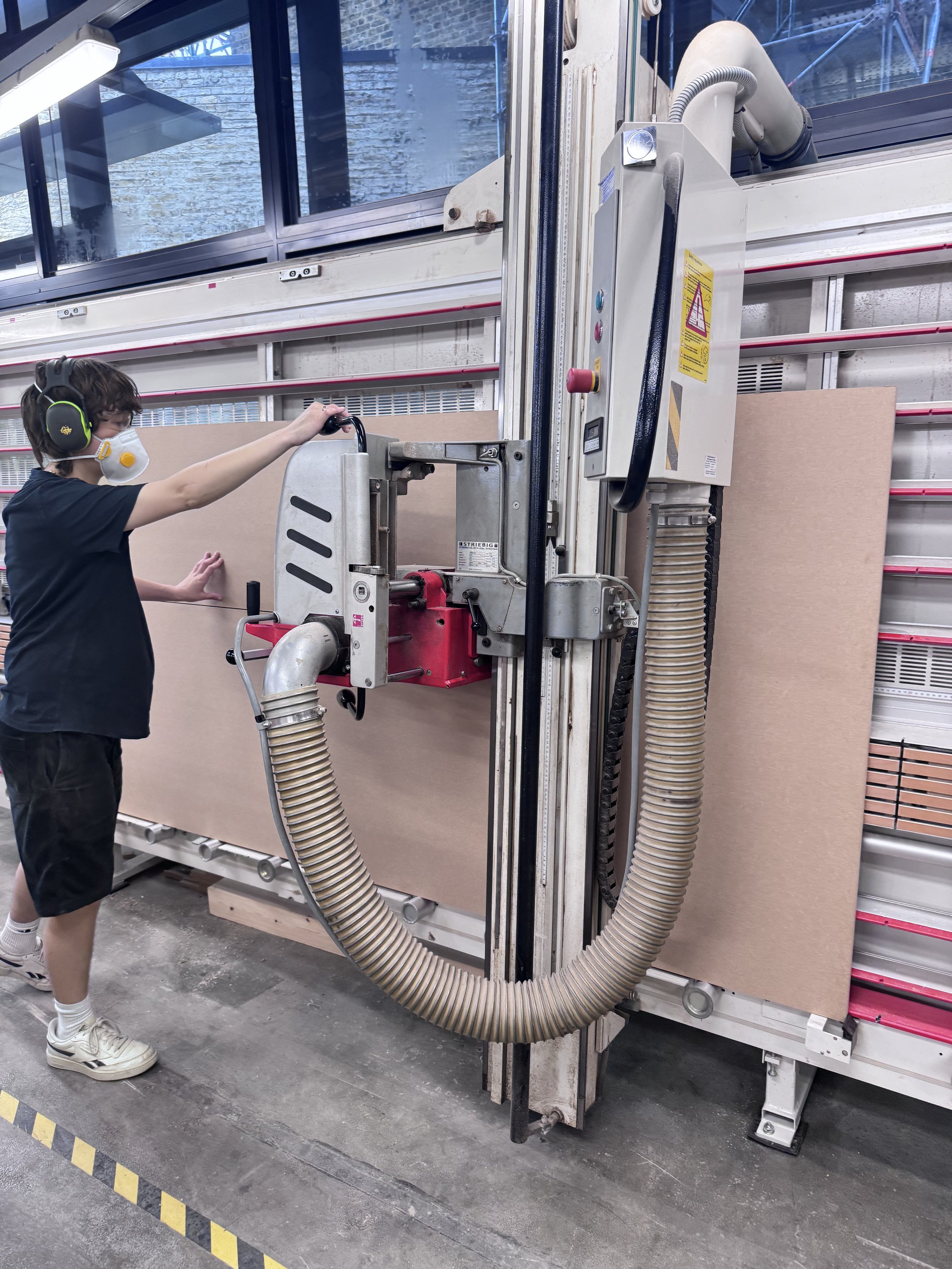
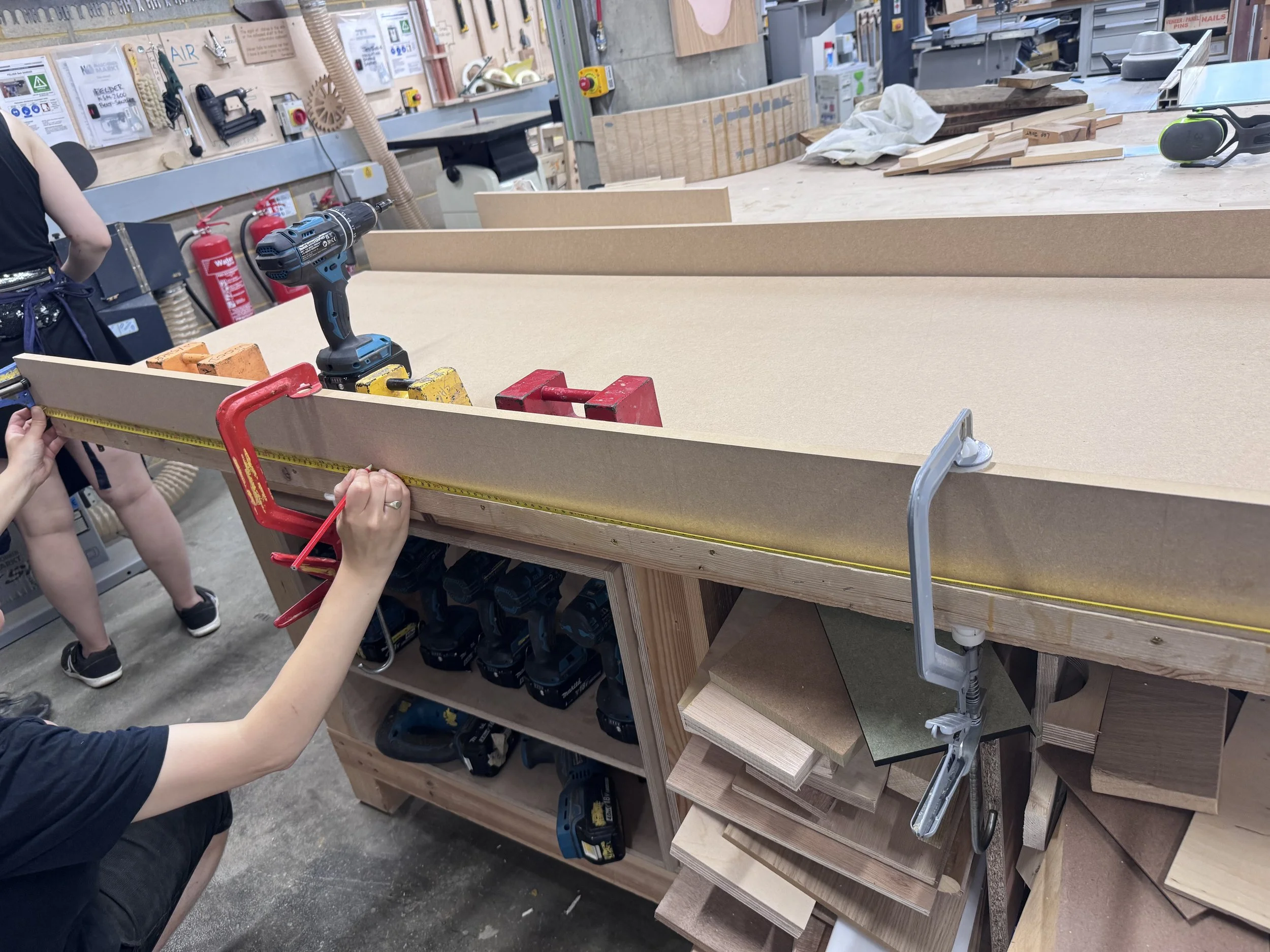
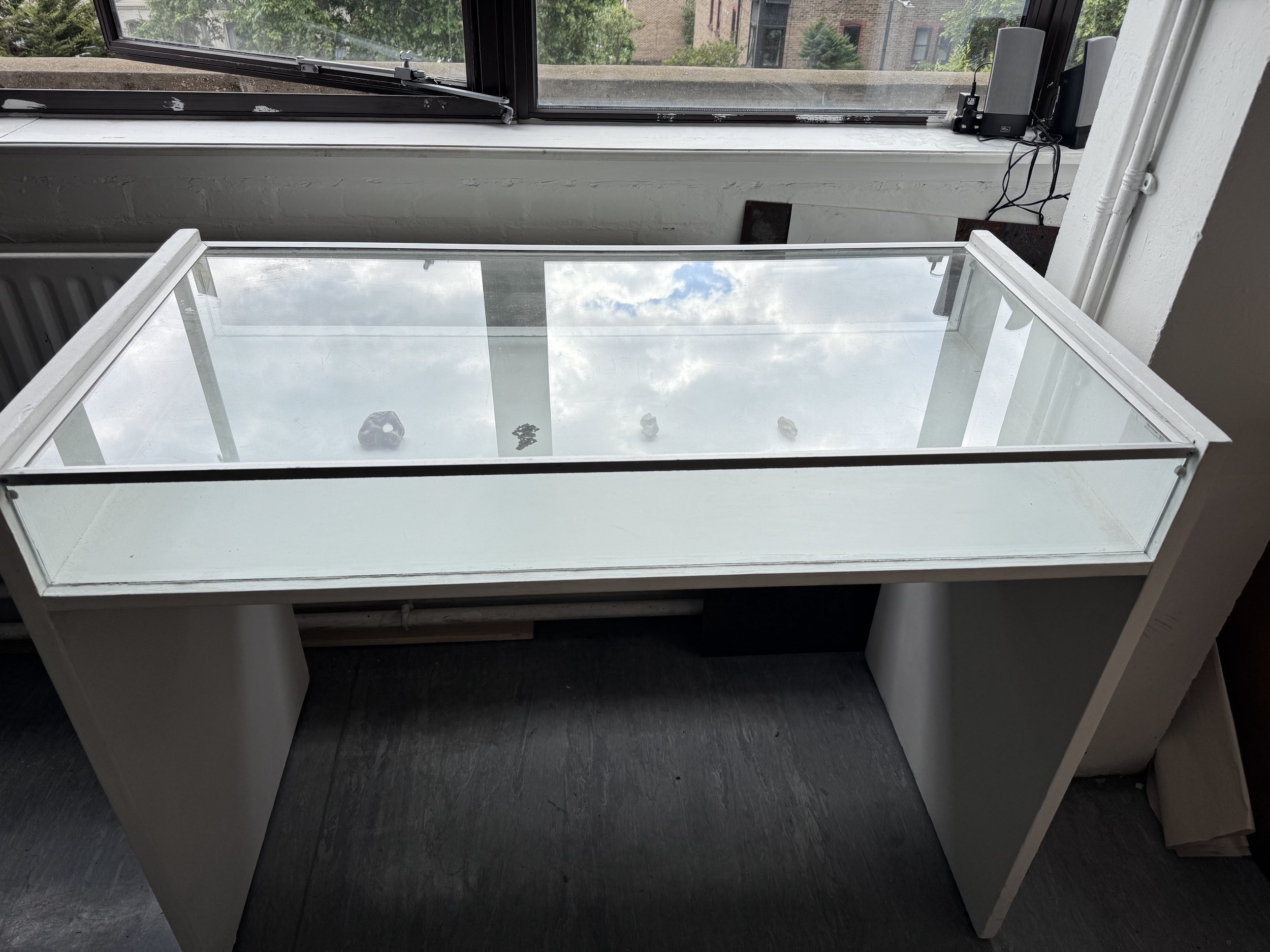
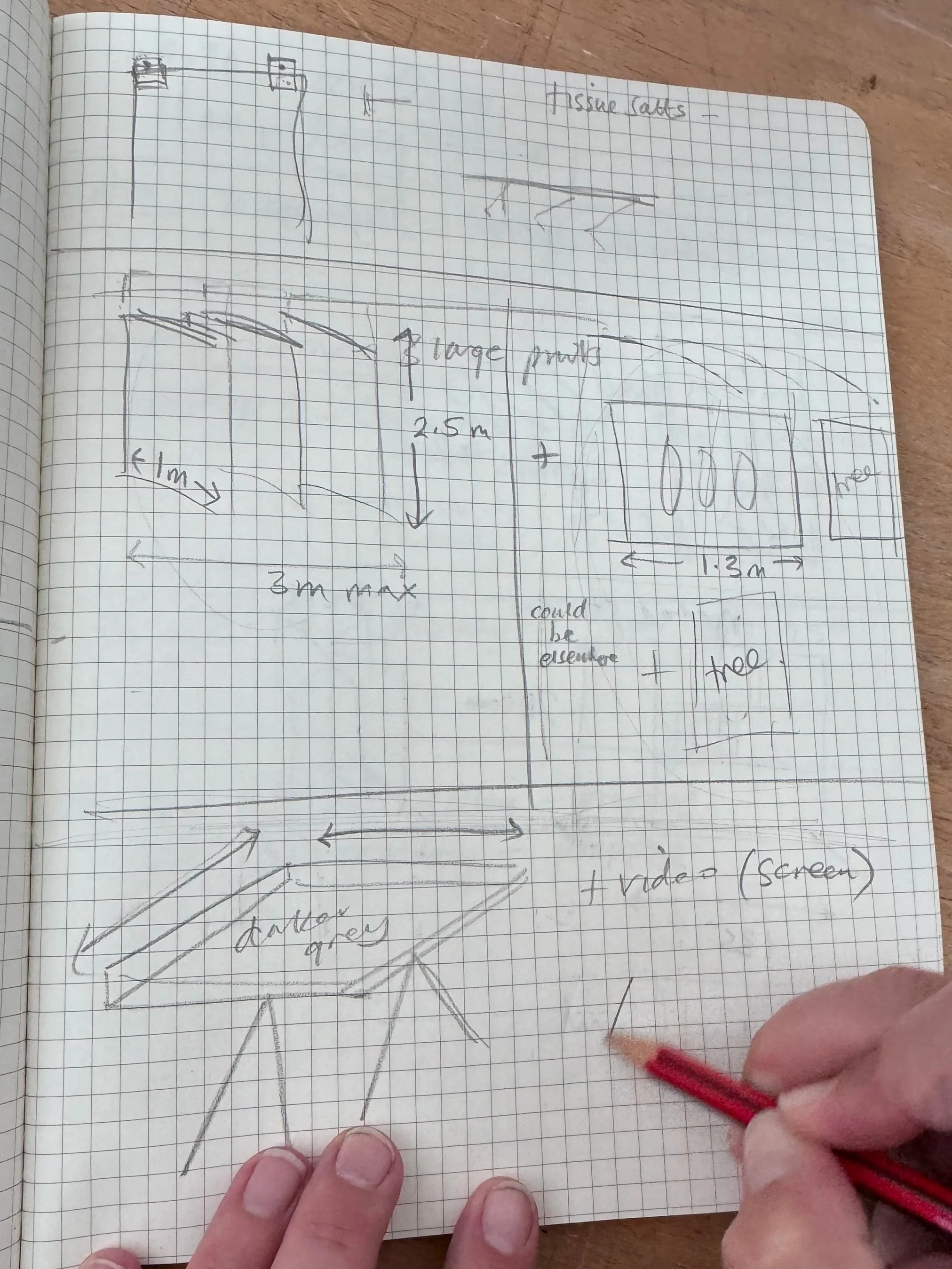
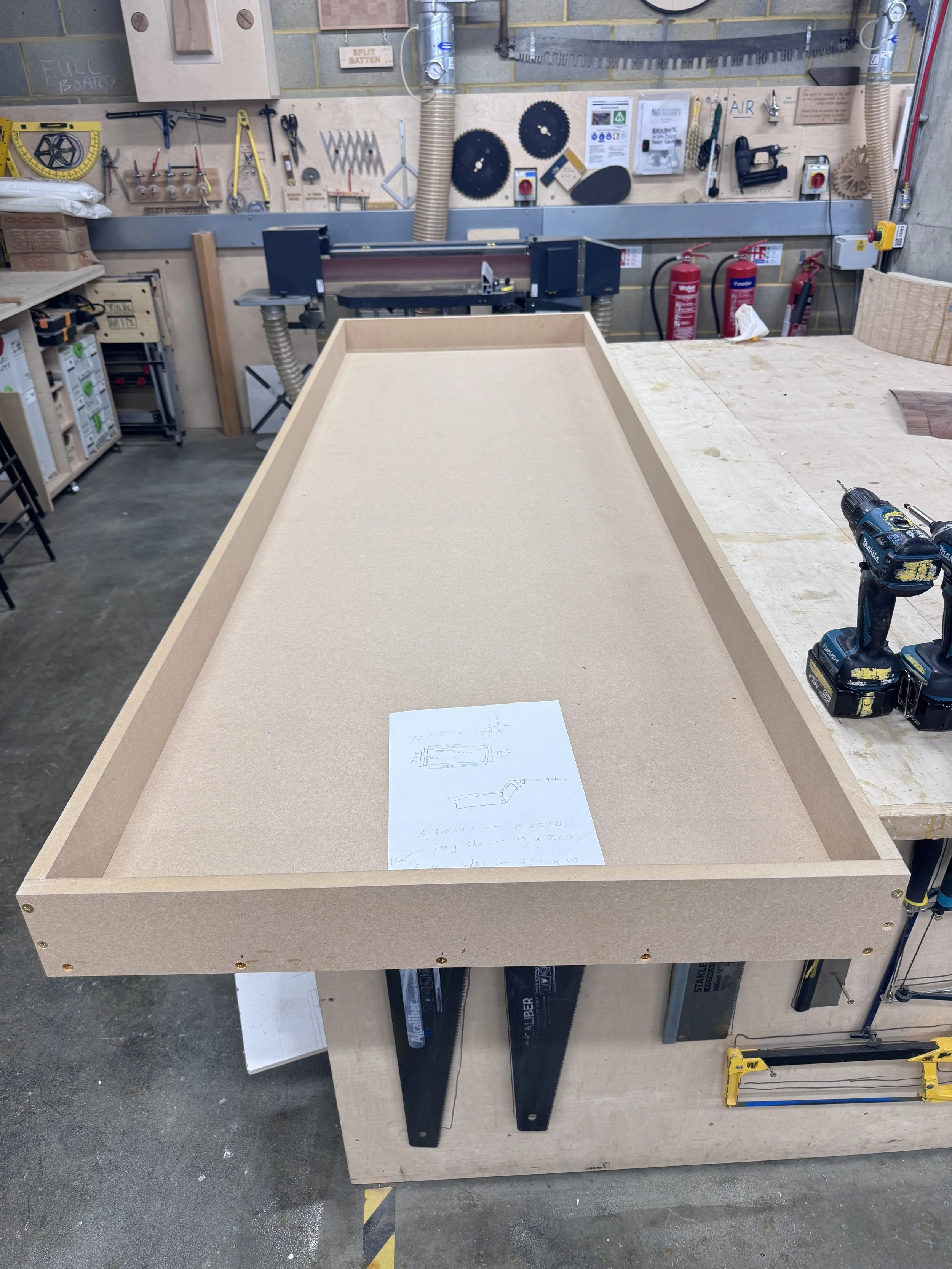
During Unit 3, I participated in several exhibitions, with the most significant one being the MA Degree Show. I spent a great deal of time preparing and experimenting for this exhibition. Originally I used the tray I found in the campus after discuss the idea with Jo and Leo they helped me to figure out the clear idea of display. I will make my own tray because the tray I borrowed is not ideal for my art work, iI want it to be more simple and museum look and needs to have an open top to let audience look closely. I explored various display possibilities before deciding to present my work using wooden trays, which I built myself in the wood workshop. It was a completely new experience for me, as I had no prior knowledge of how to make trays, but with the help of the technicians, I successfully completed them.
I also spent time considering how to arrange my sculptures and prints. Initially, I planned to display them separately, but I later realised that they needed to engage in a dialogue with one another. Therefore, I decided to present them together. Additionally, I experimented with how to show my film—whether to project it on the wall or play it on a screen. I ultimately chose to use a screen, as it provided a darker, more mysterious background and helped reduce the sense of technological interference in the atmosphere of the work.
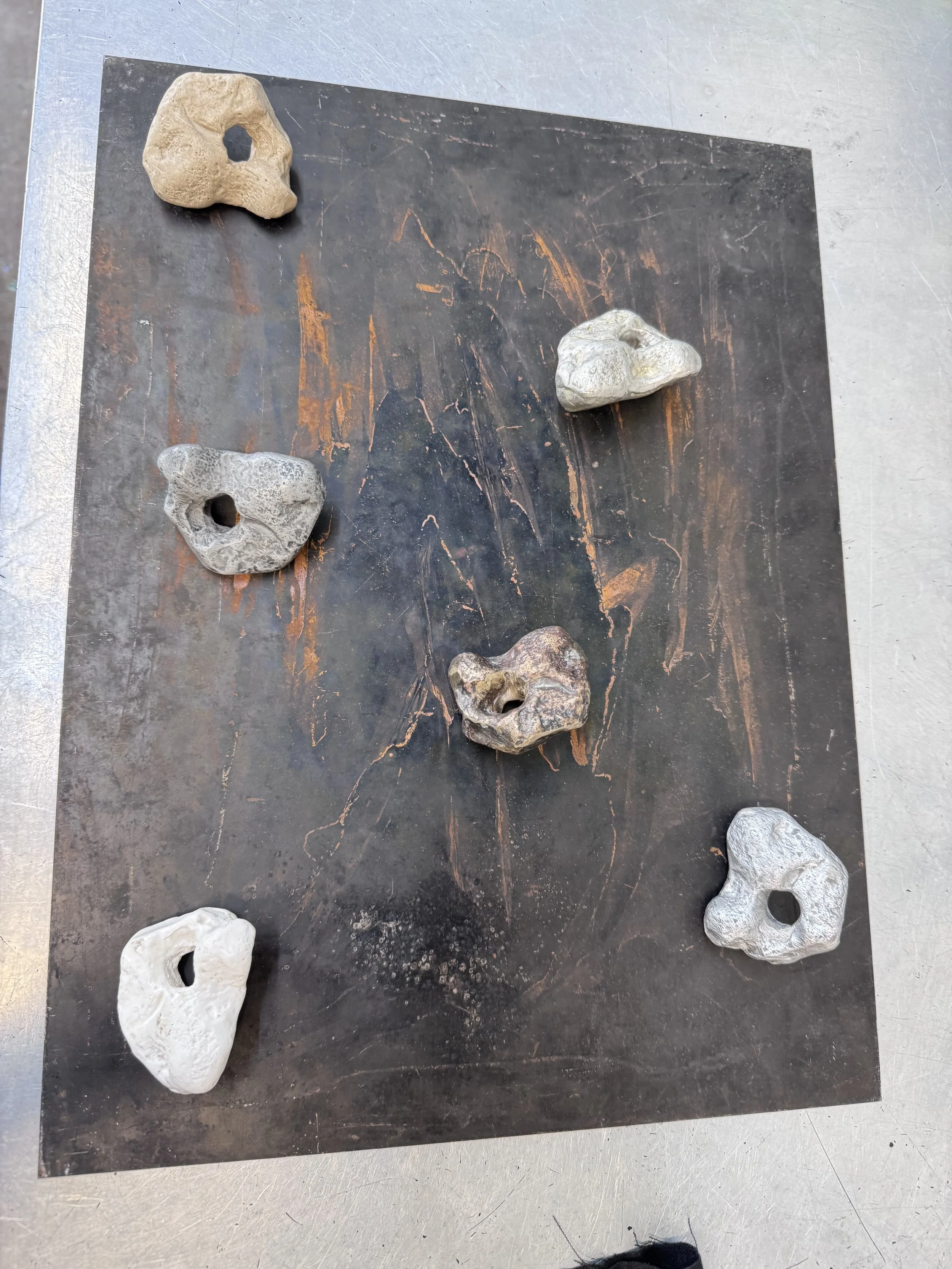
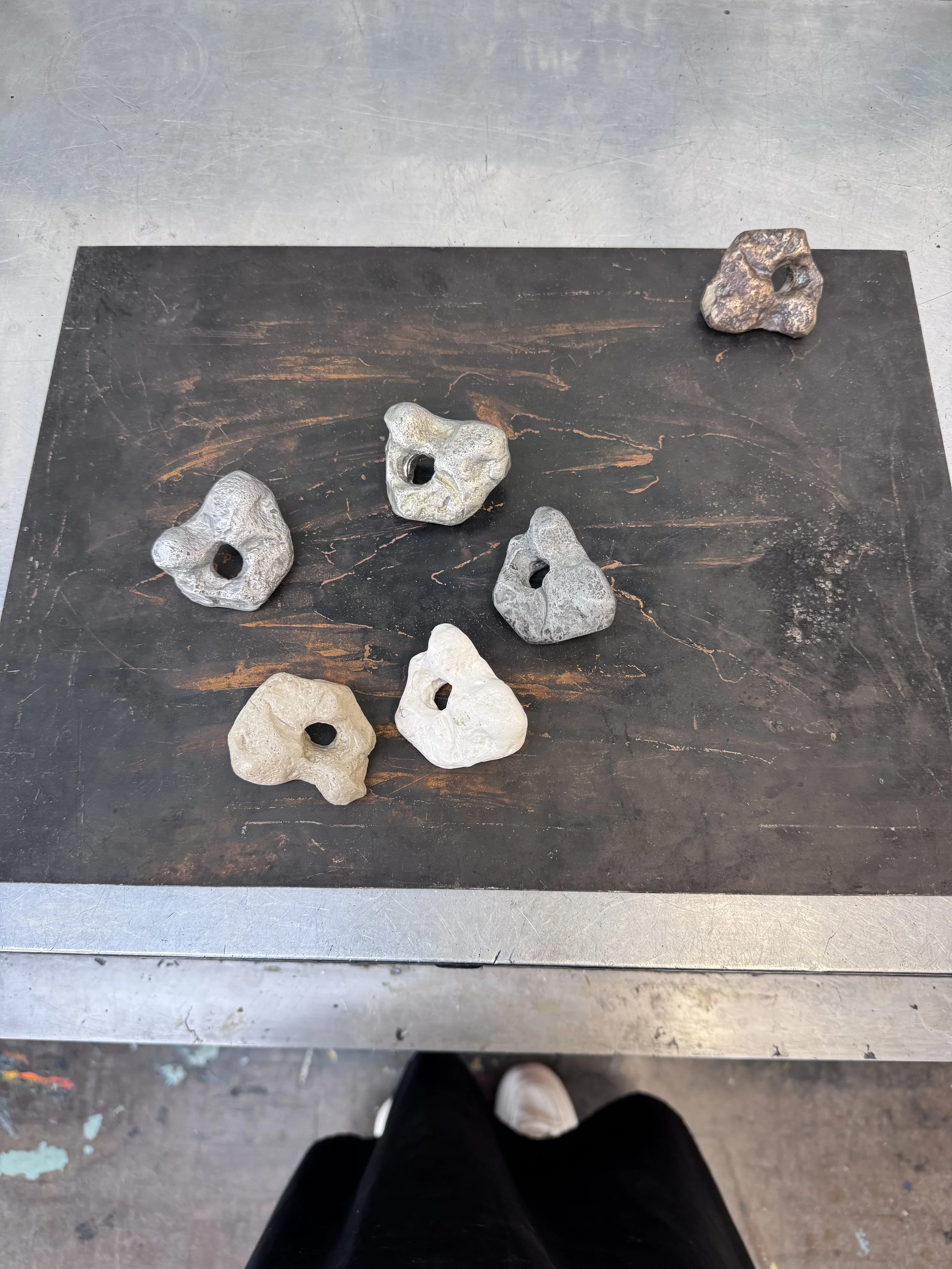
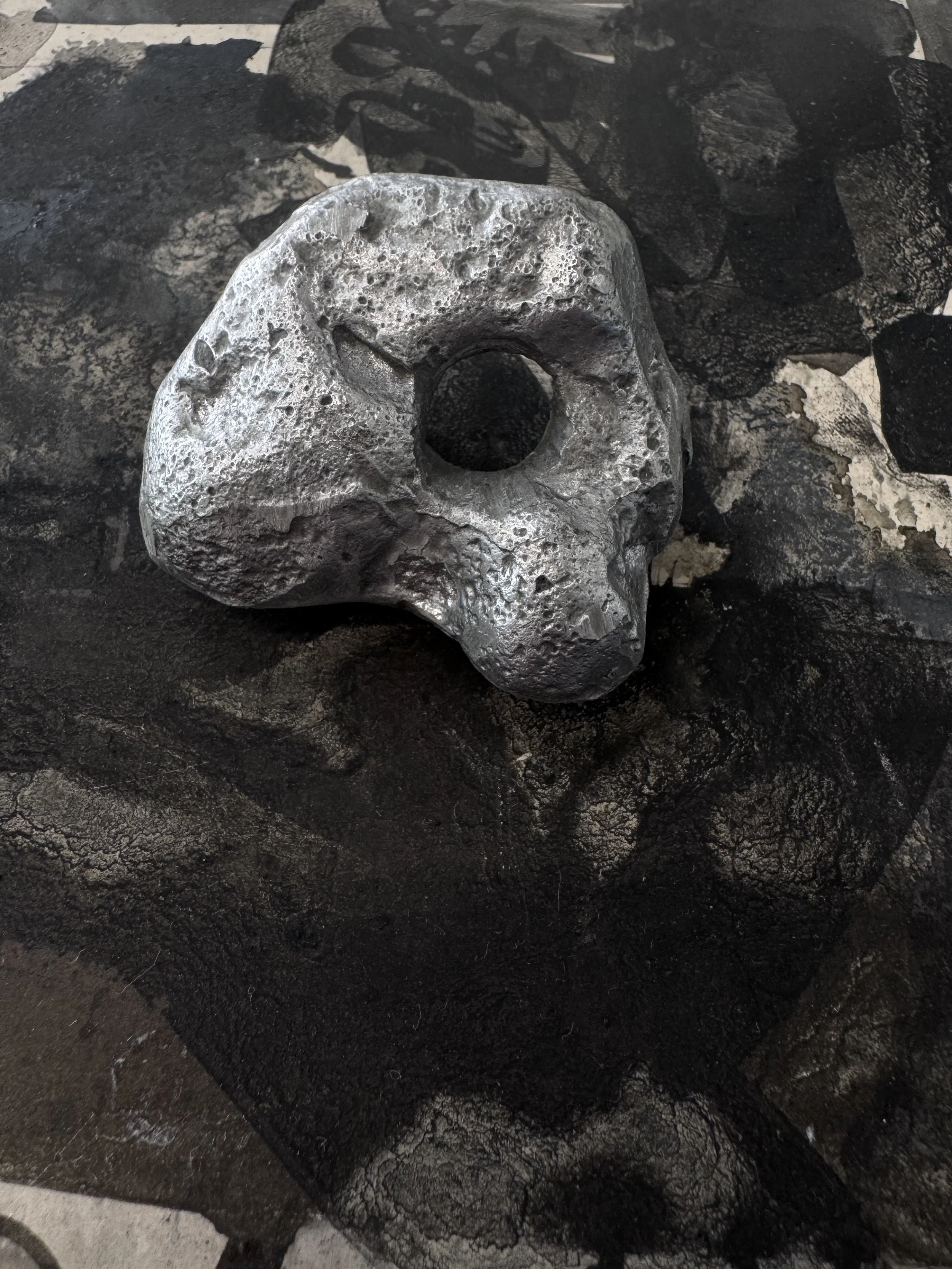
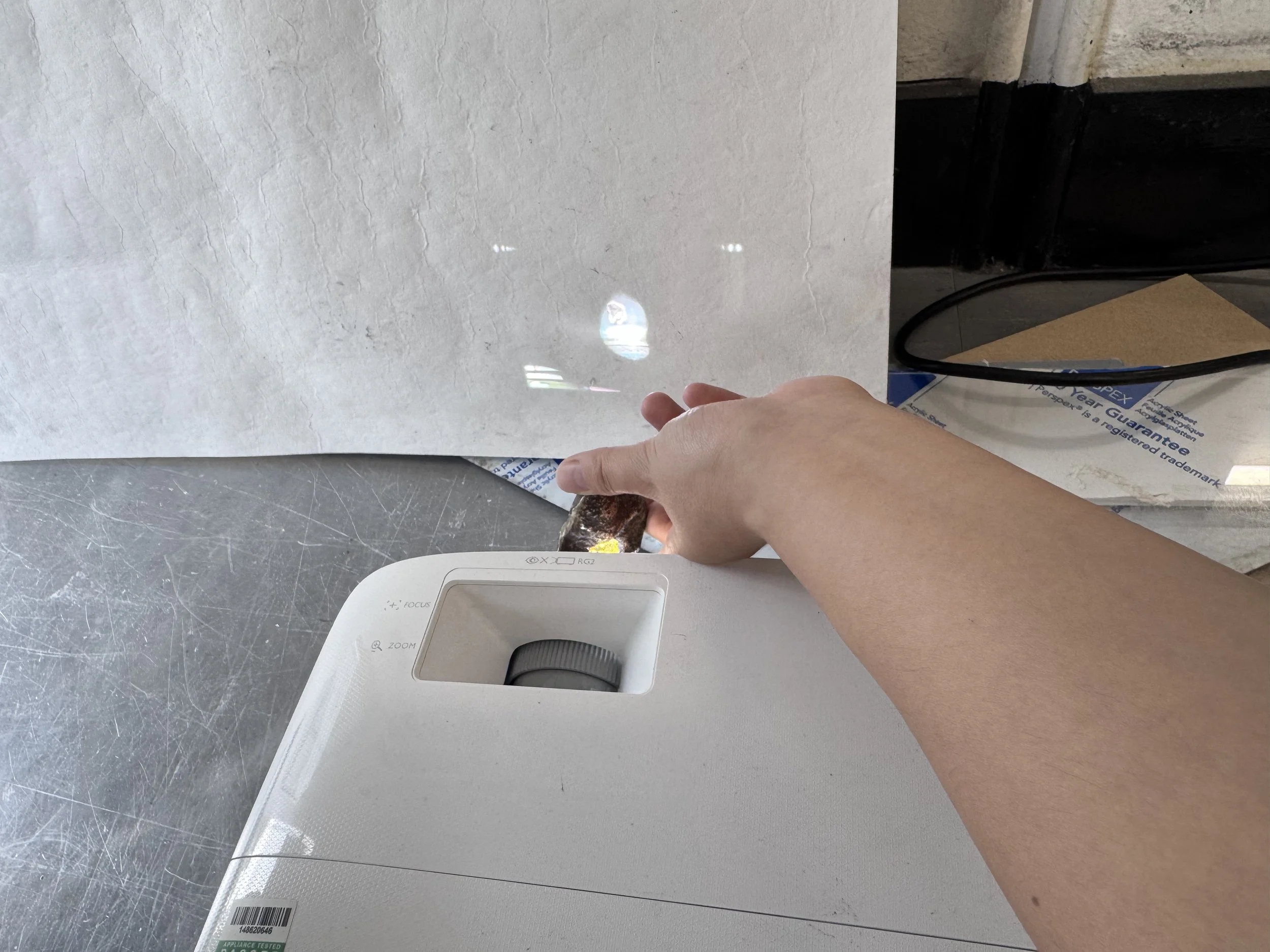
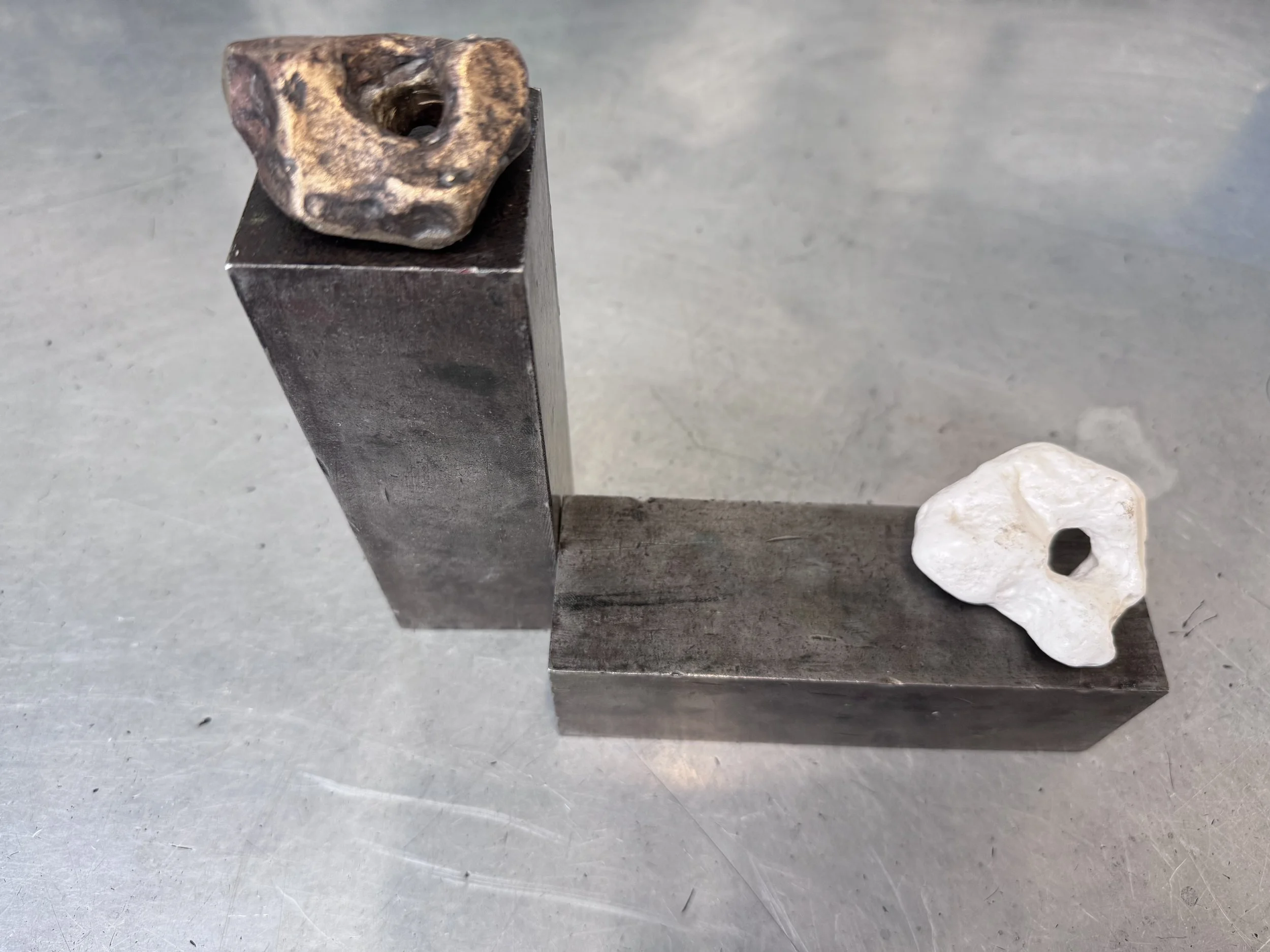
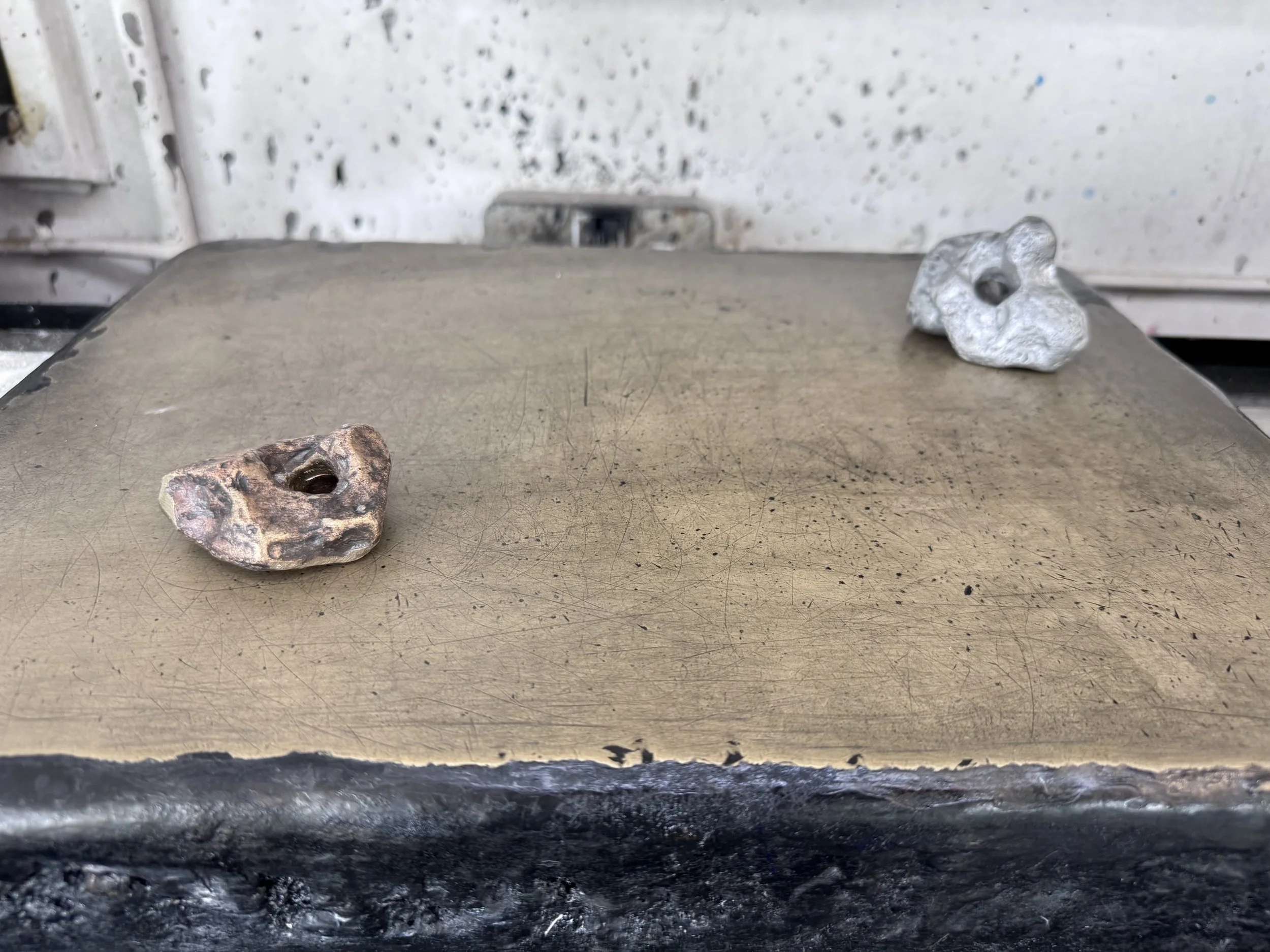
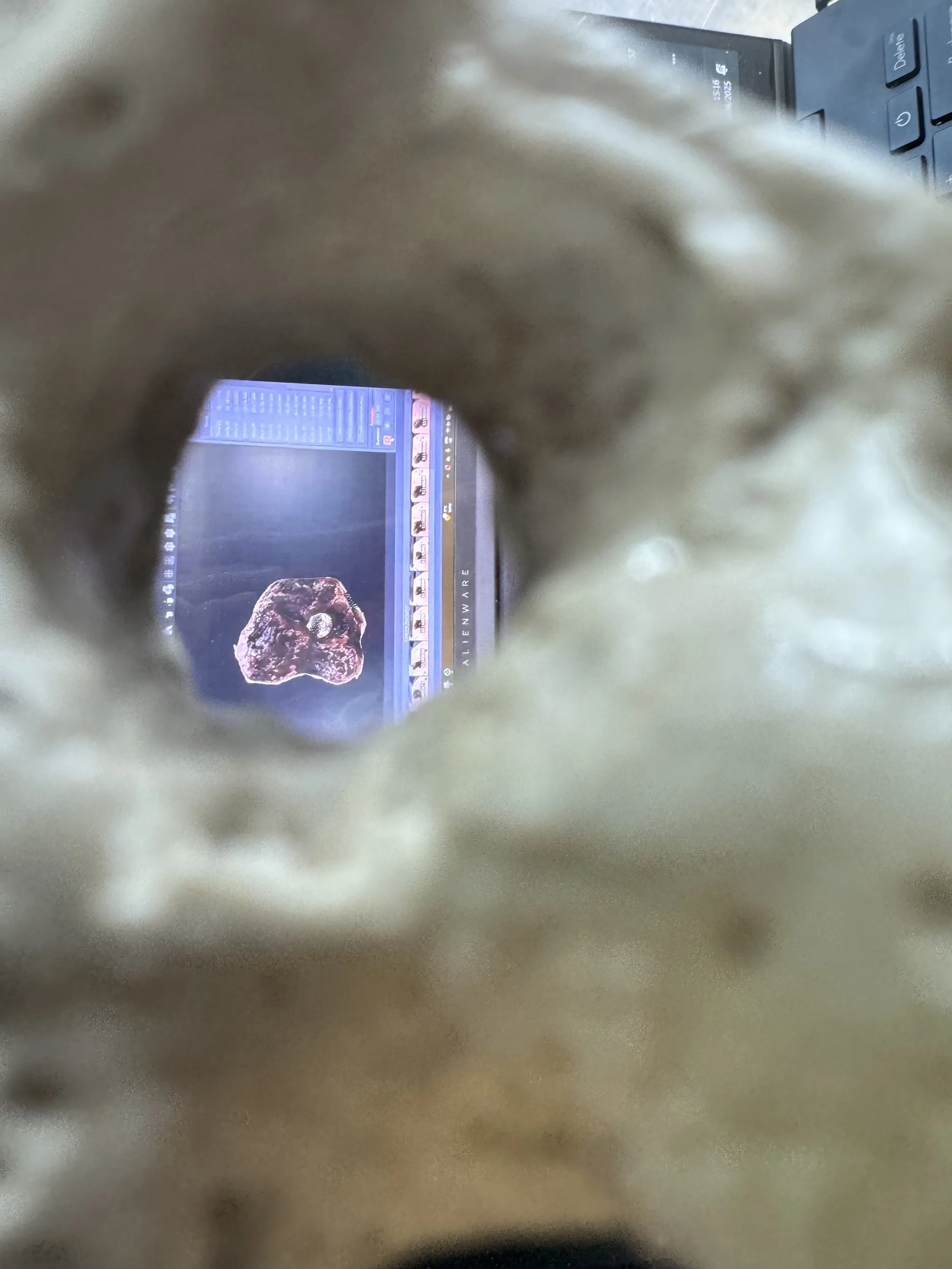
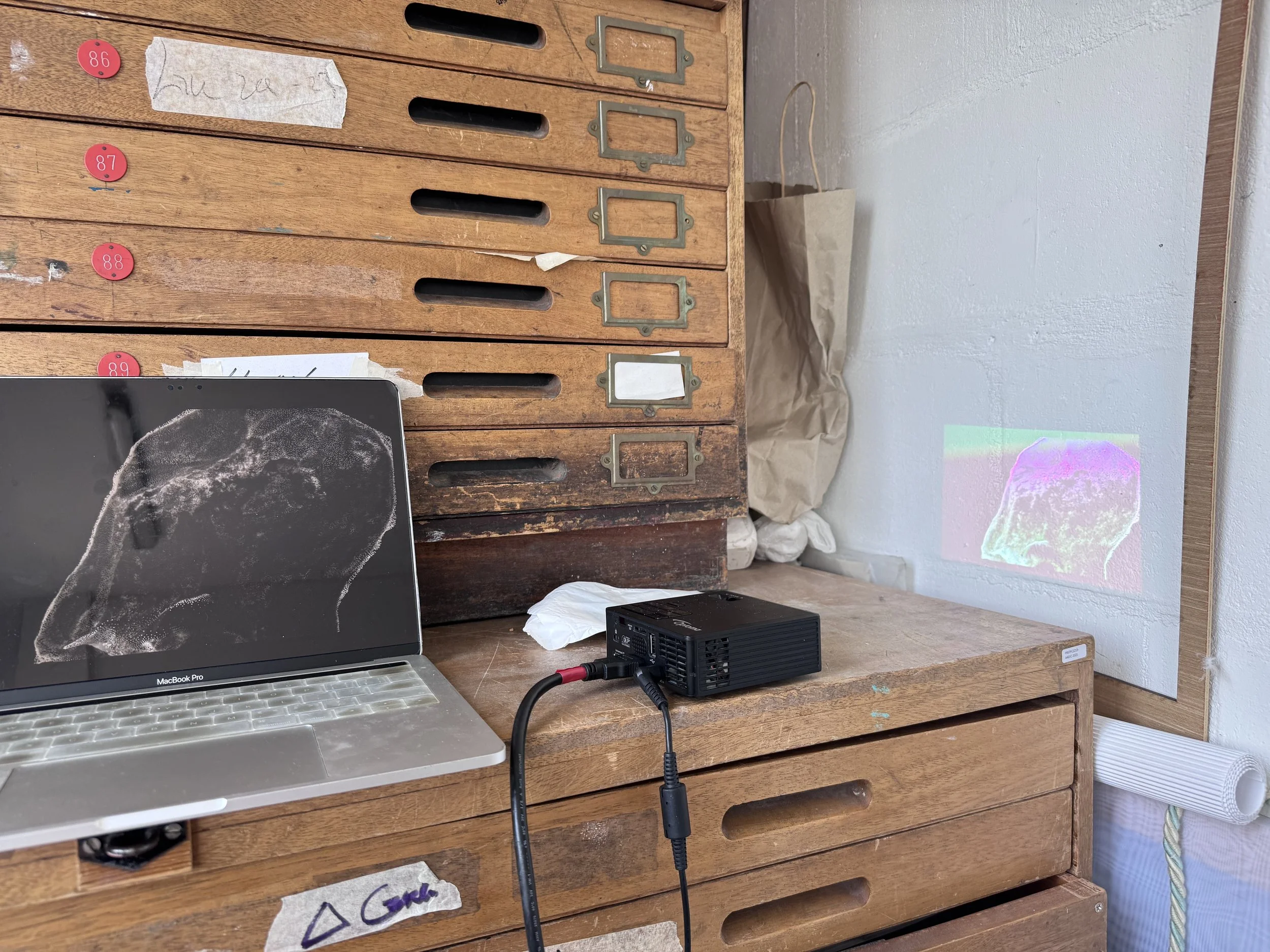
Test out the video through the hole of Hagstone or using pico projector
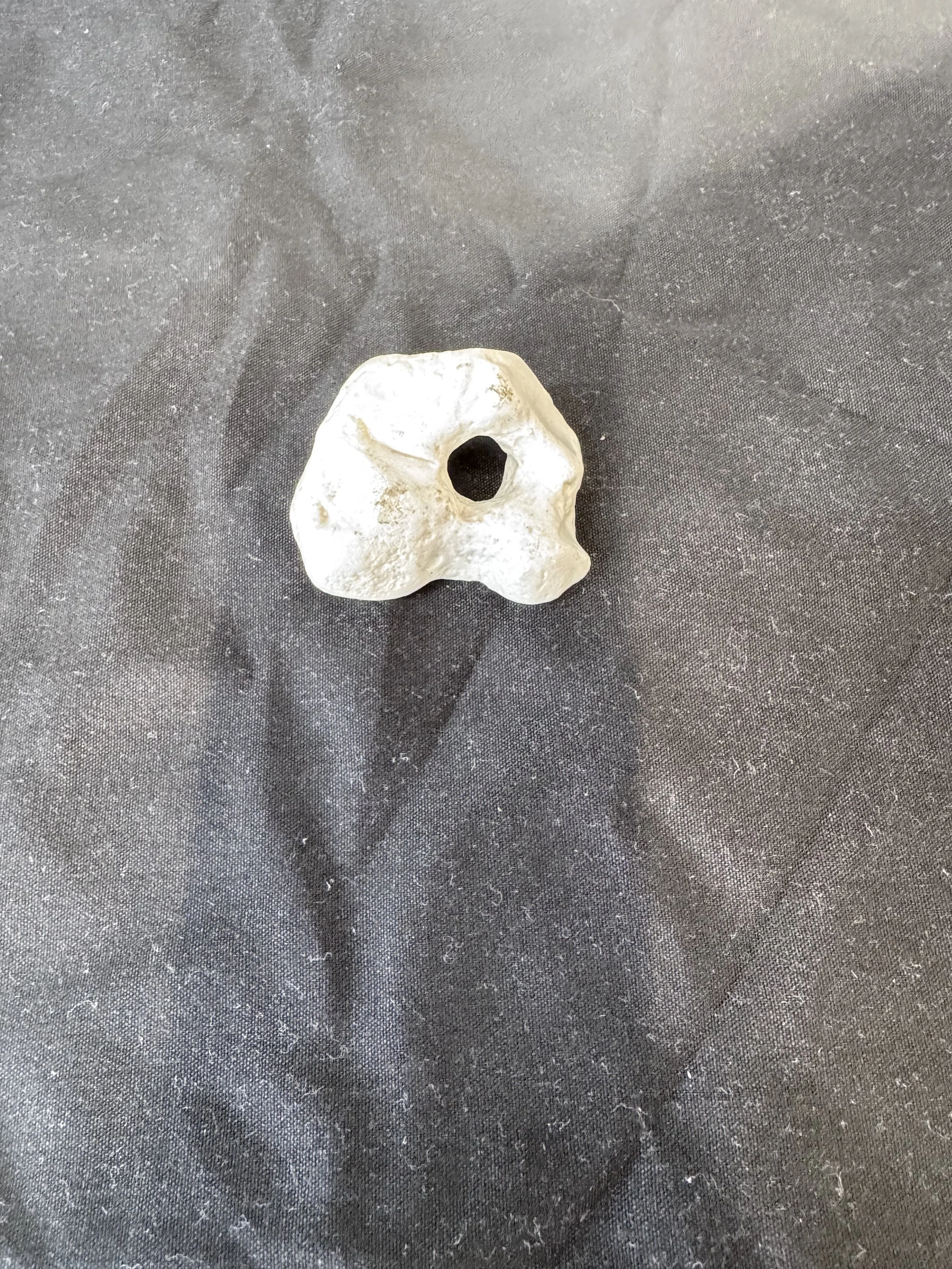
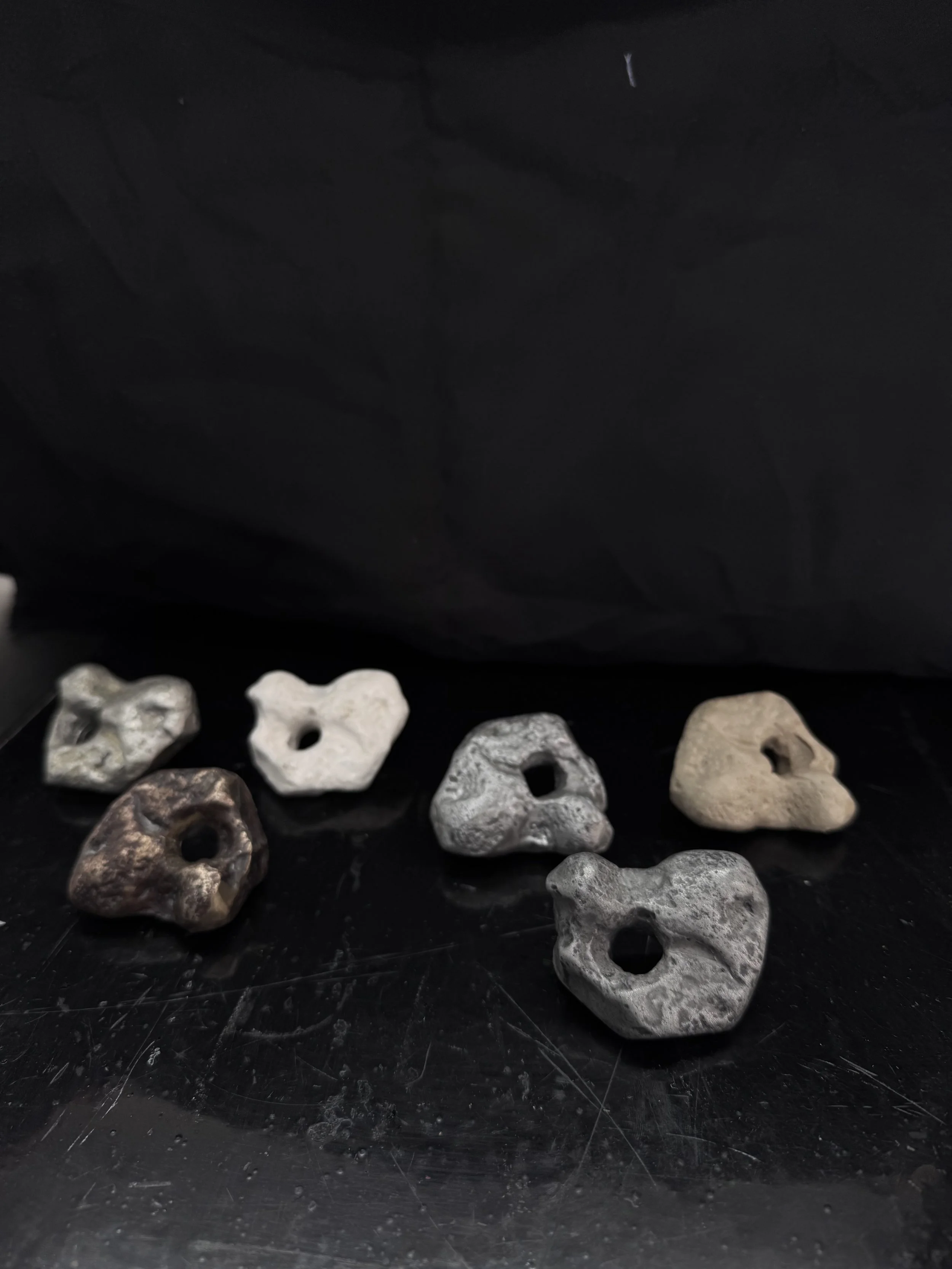
Test out the display of the Hagstone
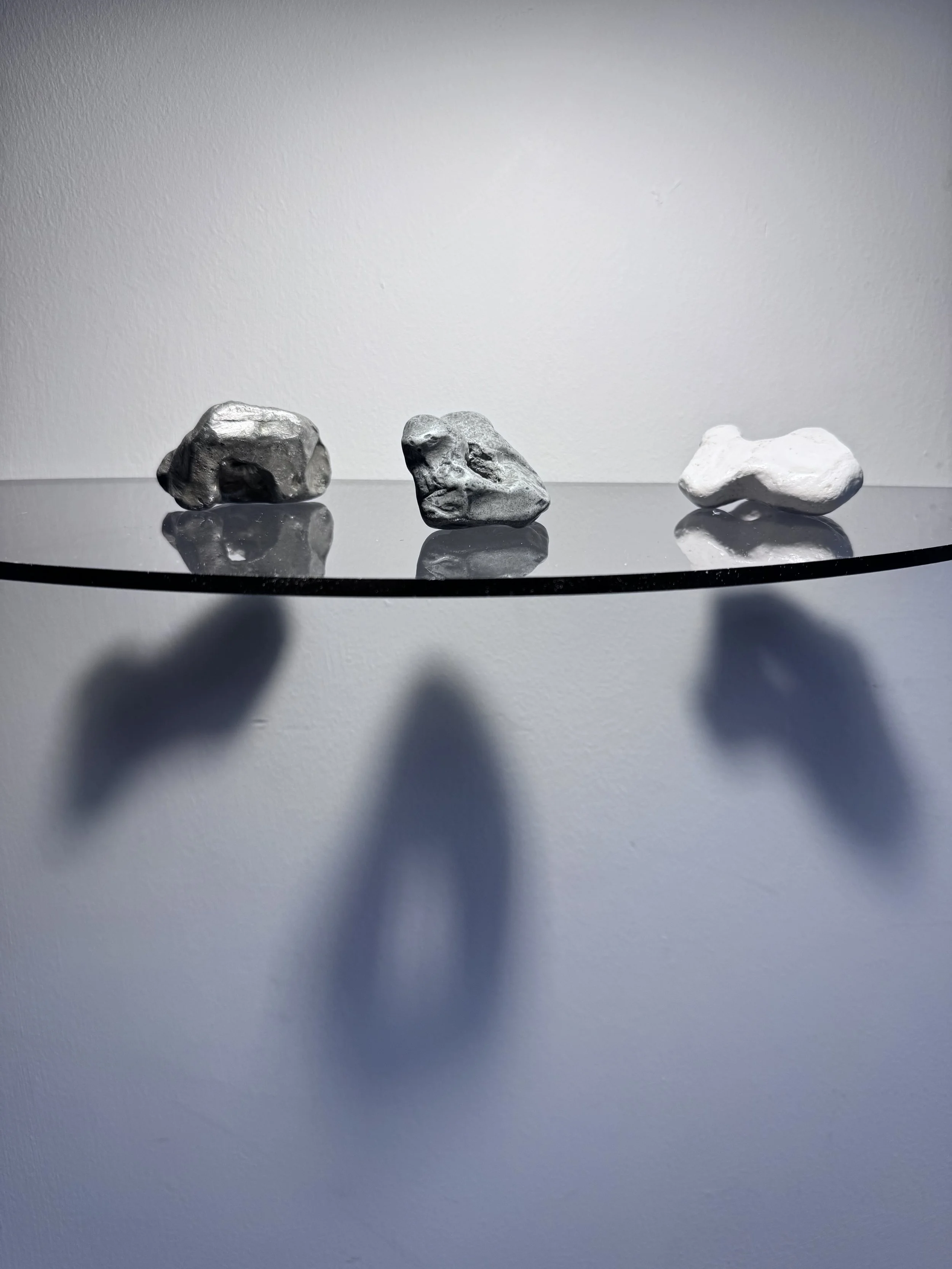


Discuss display with Jo and Leo
Sketches of the trays

Display on a tray
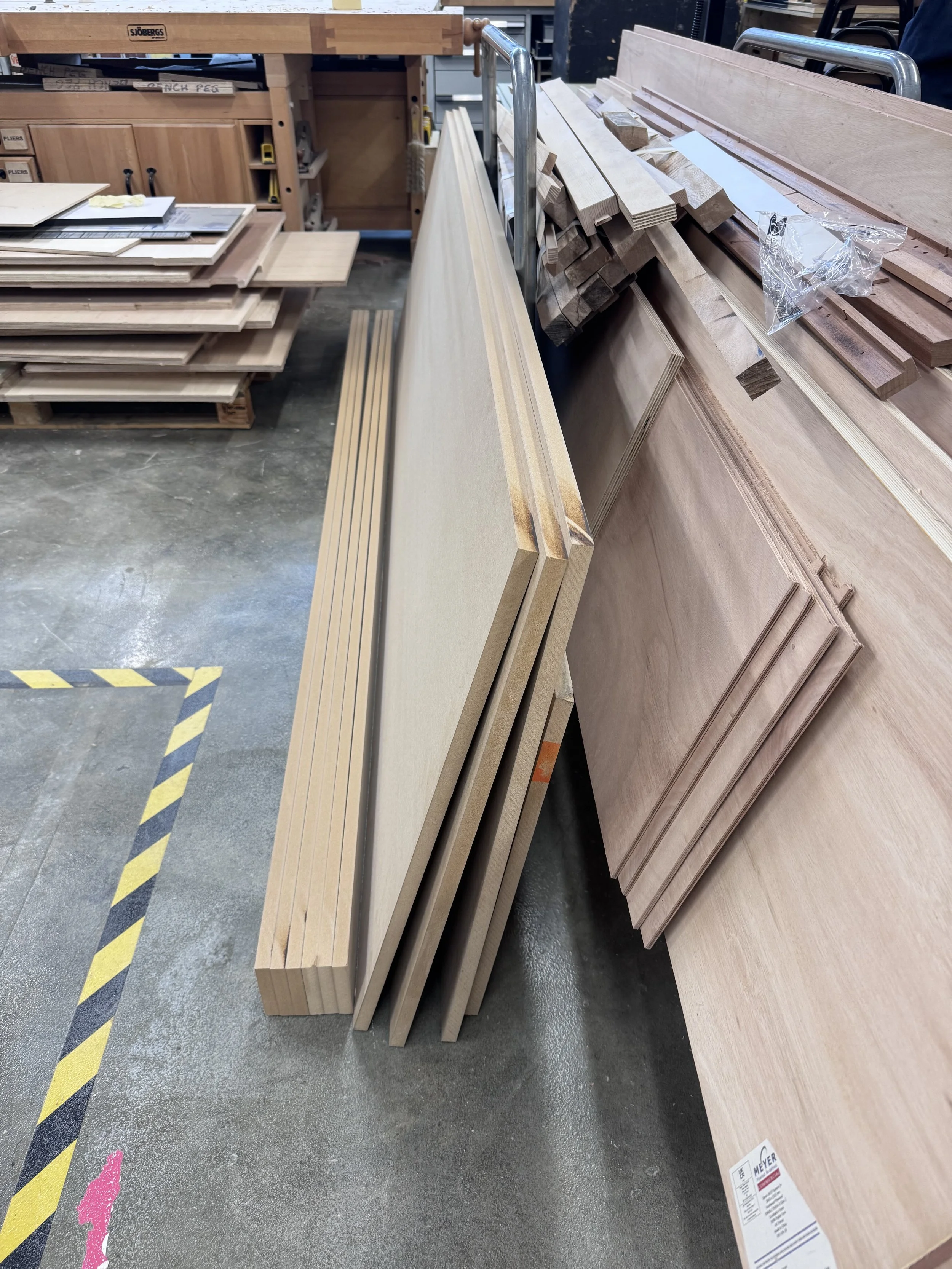
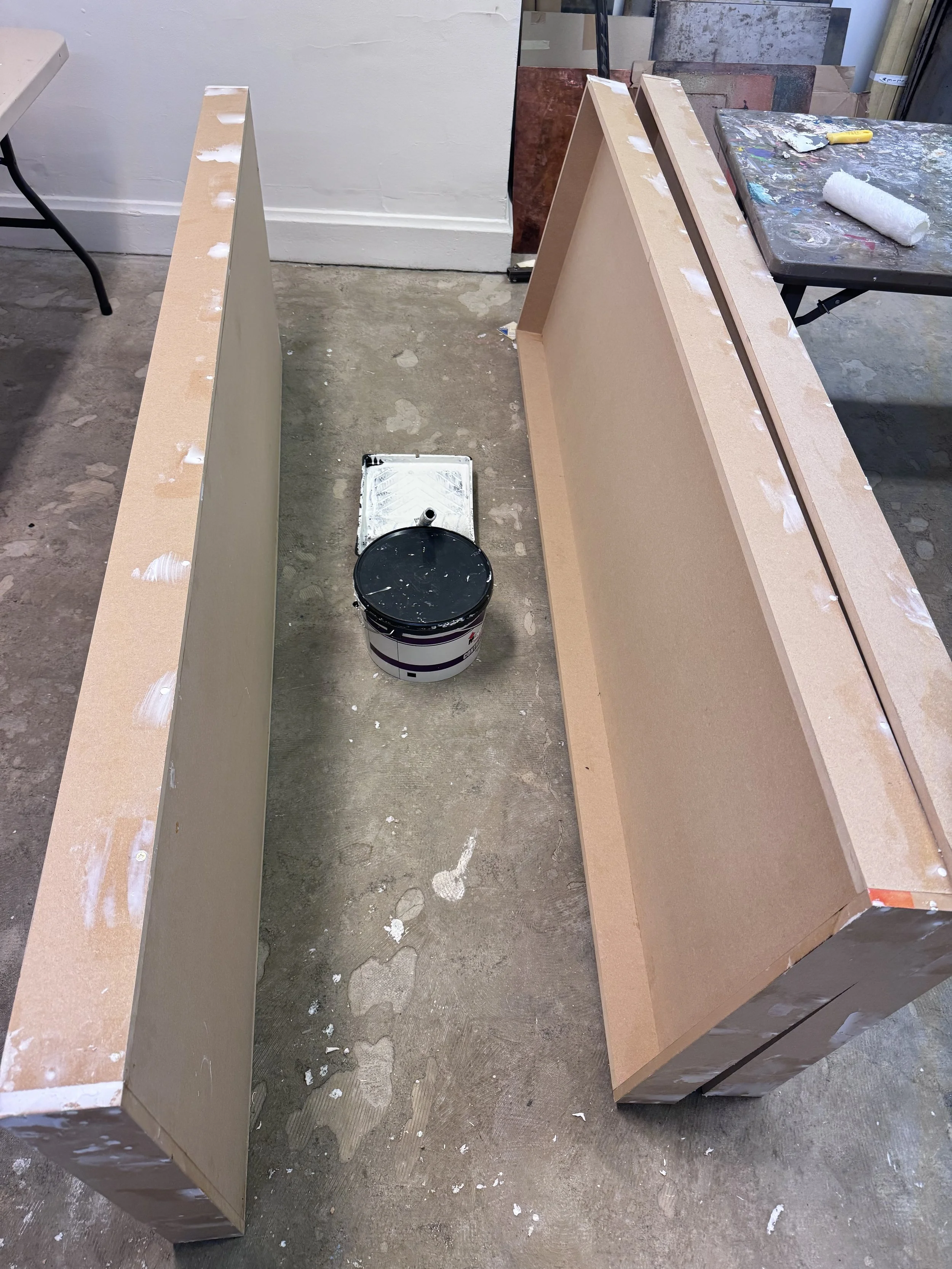
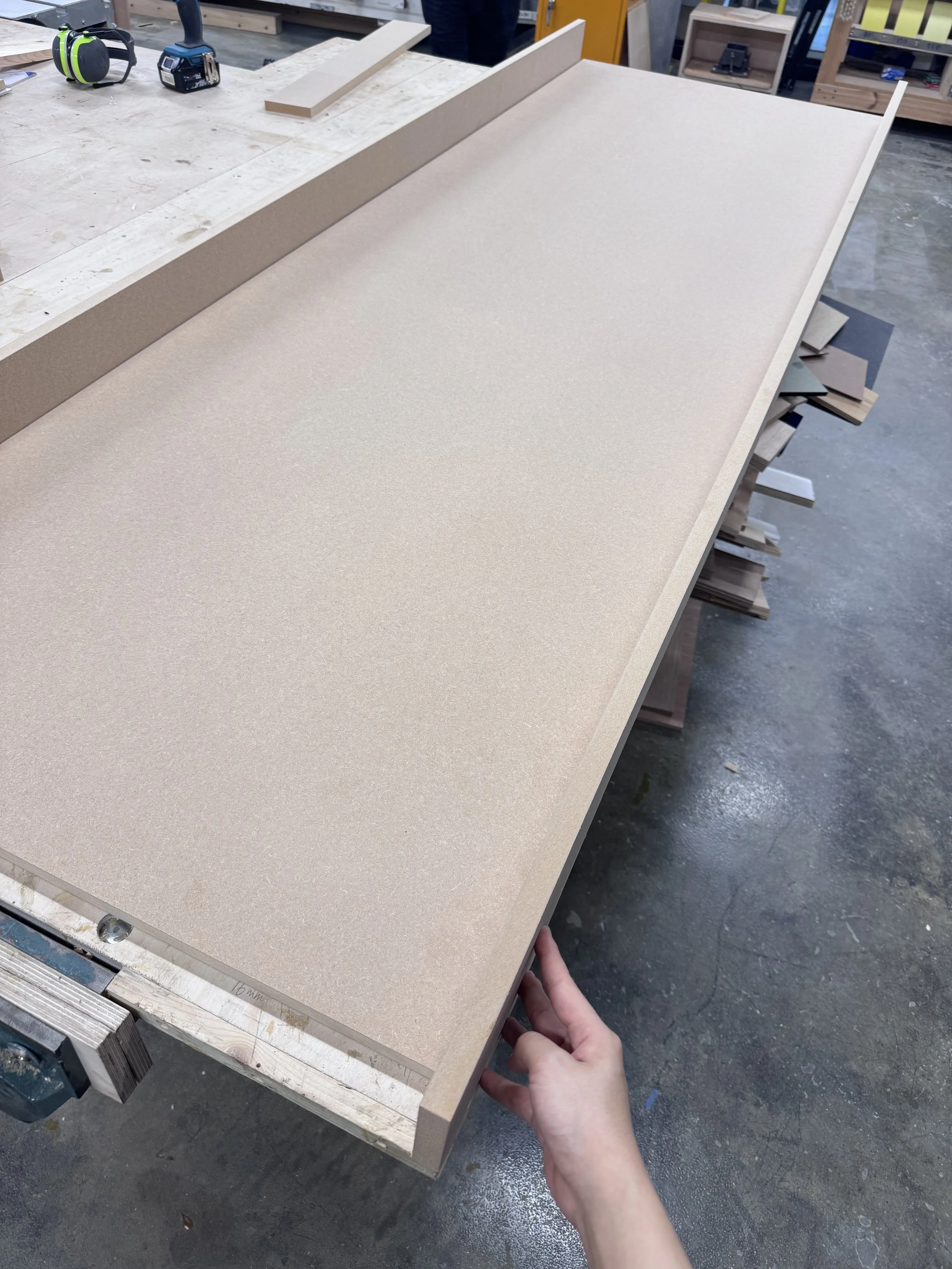
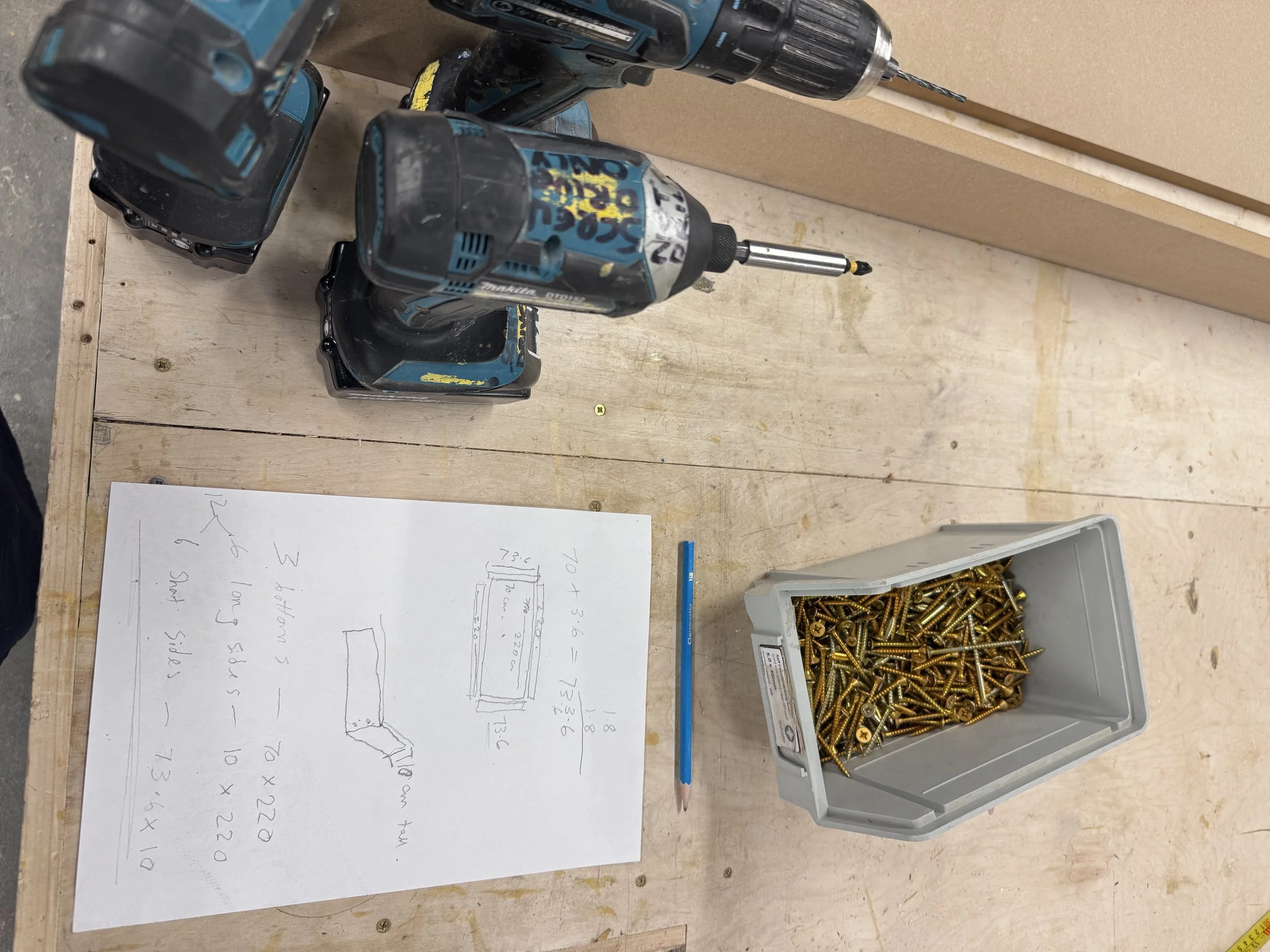
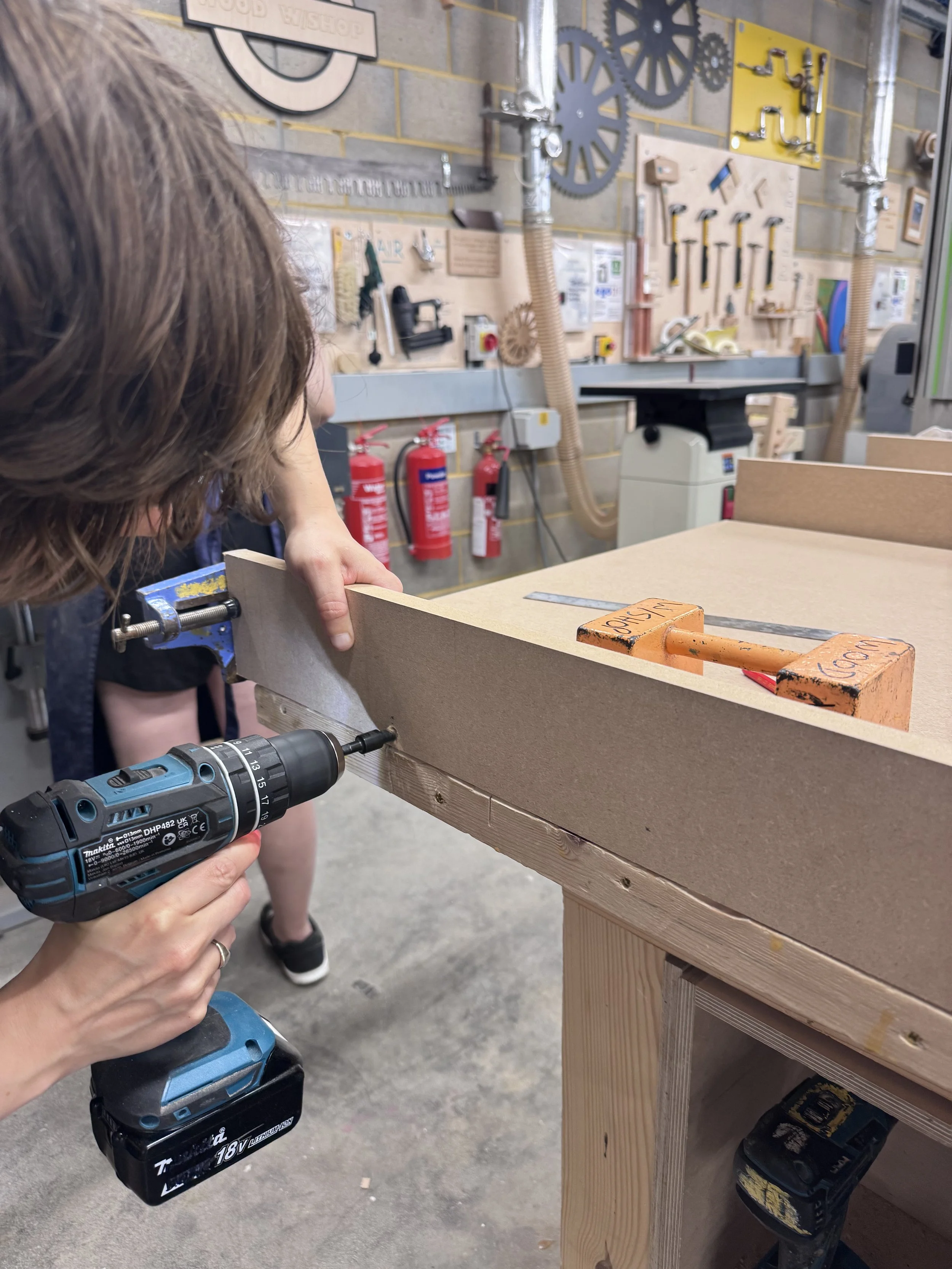
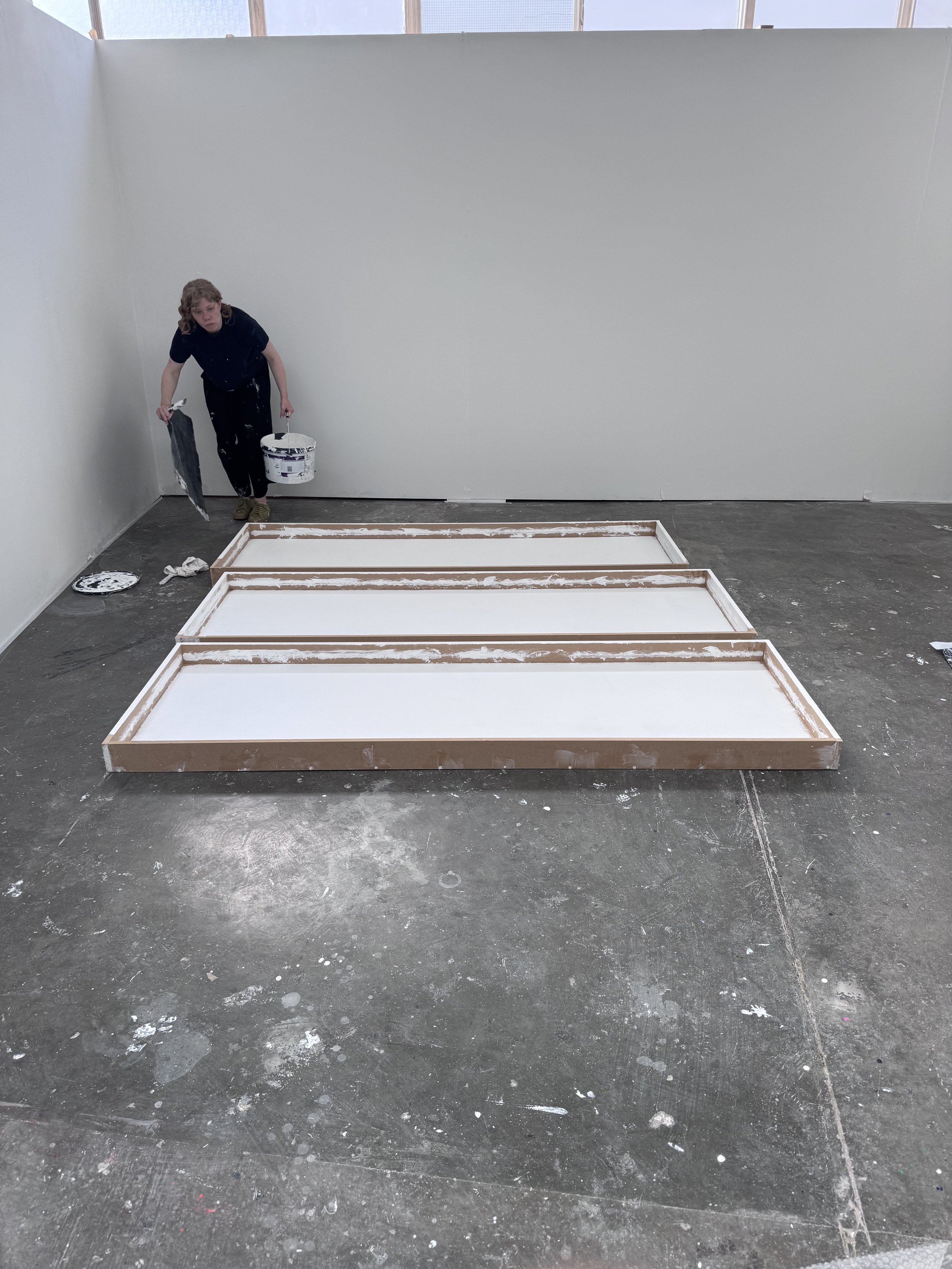
Process of making and painting trays
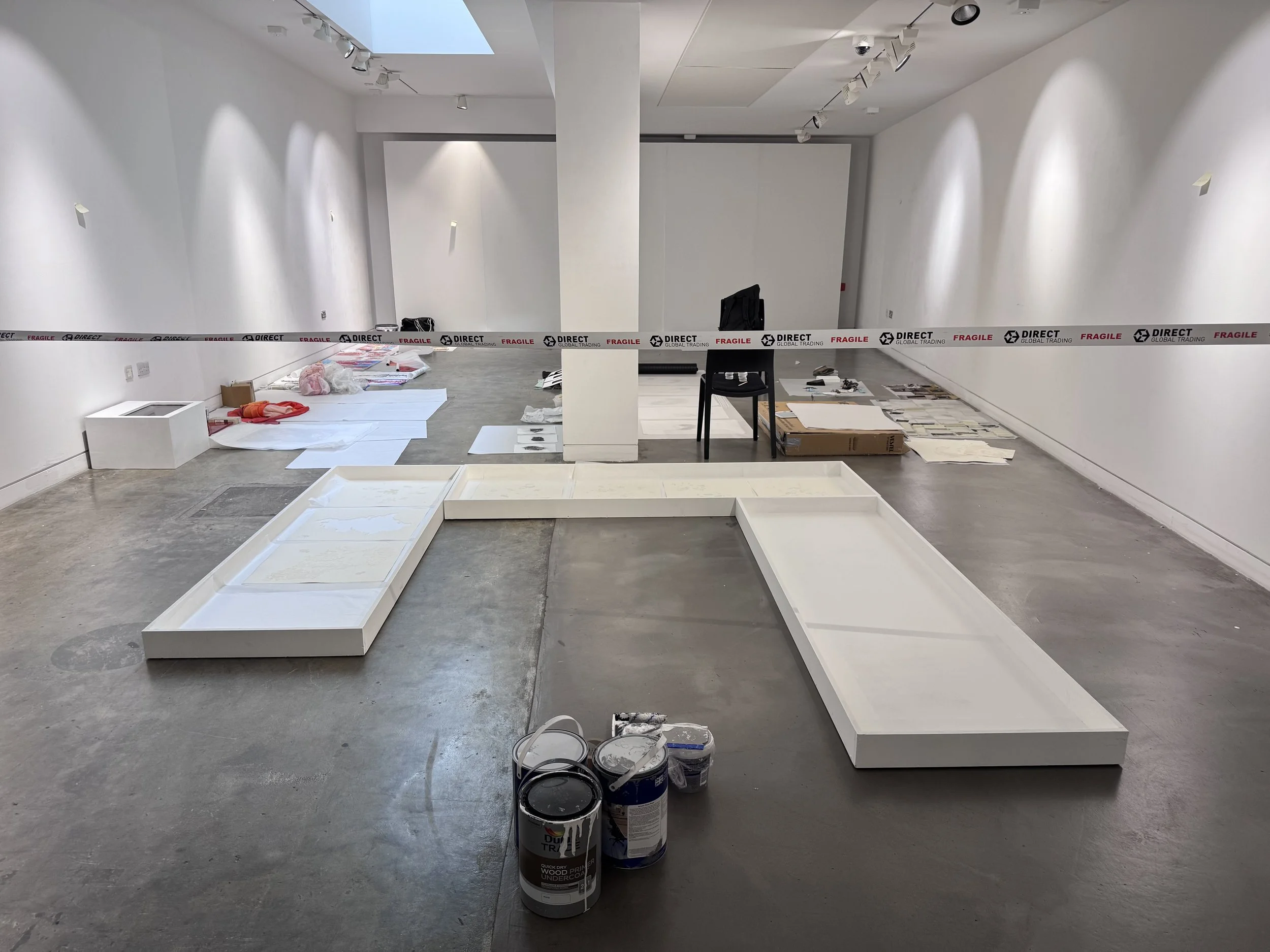
Test out the display with 3 trays

Curation and Collaboration
After the Degree Show, during the summer break, I organised a group exhibition at Peckham Levels in collaboration with Painting and Drawing students, as well as other artists. Our idea was to bring together creators from diverse backgrounds, including students from Camberwell working in drawing, painting, and photography, alongside independent artists from different disciplines.
The exhibition, titled “Fragility,” gathered a group of artists who, through varied practices and perspectives, reflected on the uncertain and delicate nature of existence. The works focused on what is often overlooked — the fleeting, the subtle, and the transient aspects of everyday life. Some pieces explored personal emotion and vulnerability, while others addressed environmental instability, memory, and identity. Across film, photography, performance, installation, and mixed media, the exhibition created a shared space for observing small, quiet moments — those that are unresolved or on the verge of disappearing. Collectively, these works offered a meditation on what it means to hold onto something that may not last, yet still holds meaning.
We curated, promoted, and marketed the exhibition independently, which was an invaluable experience for me. Through this process, I gained practical skills in exhibition organisation and collaboration, as well as a deeper understanding of teamwork and creative communication.
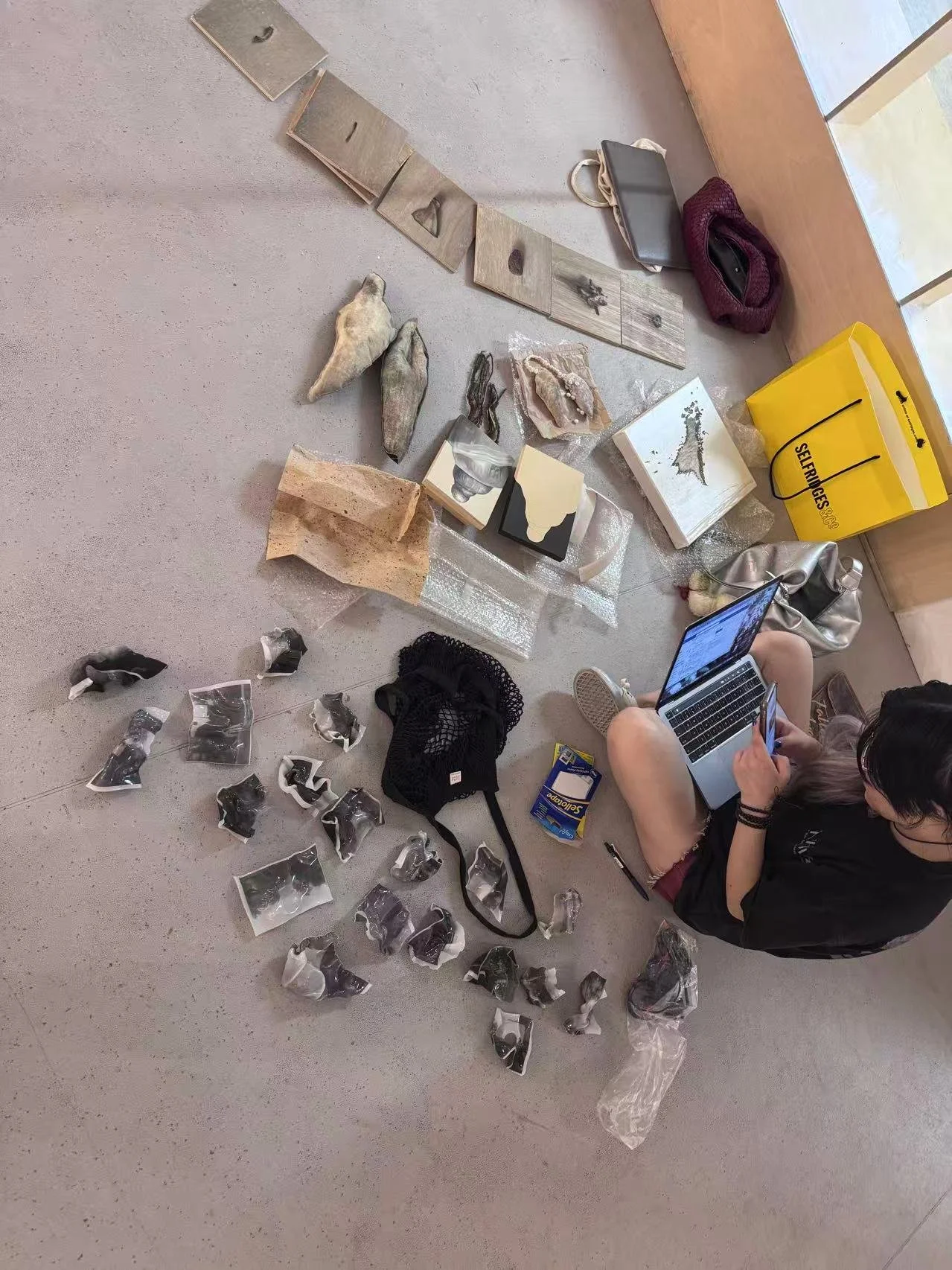
Put all art works on the floor
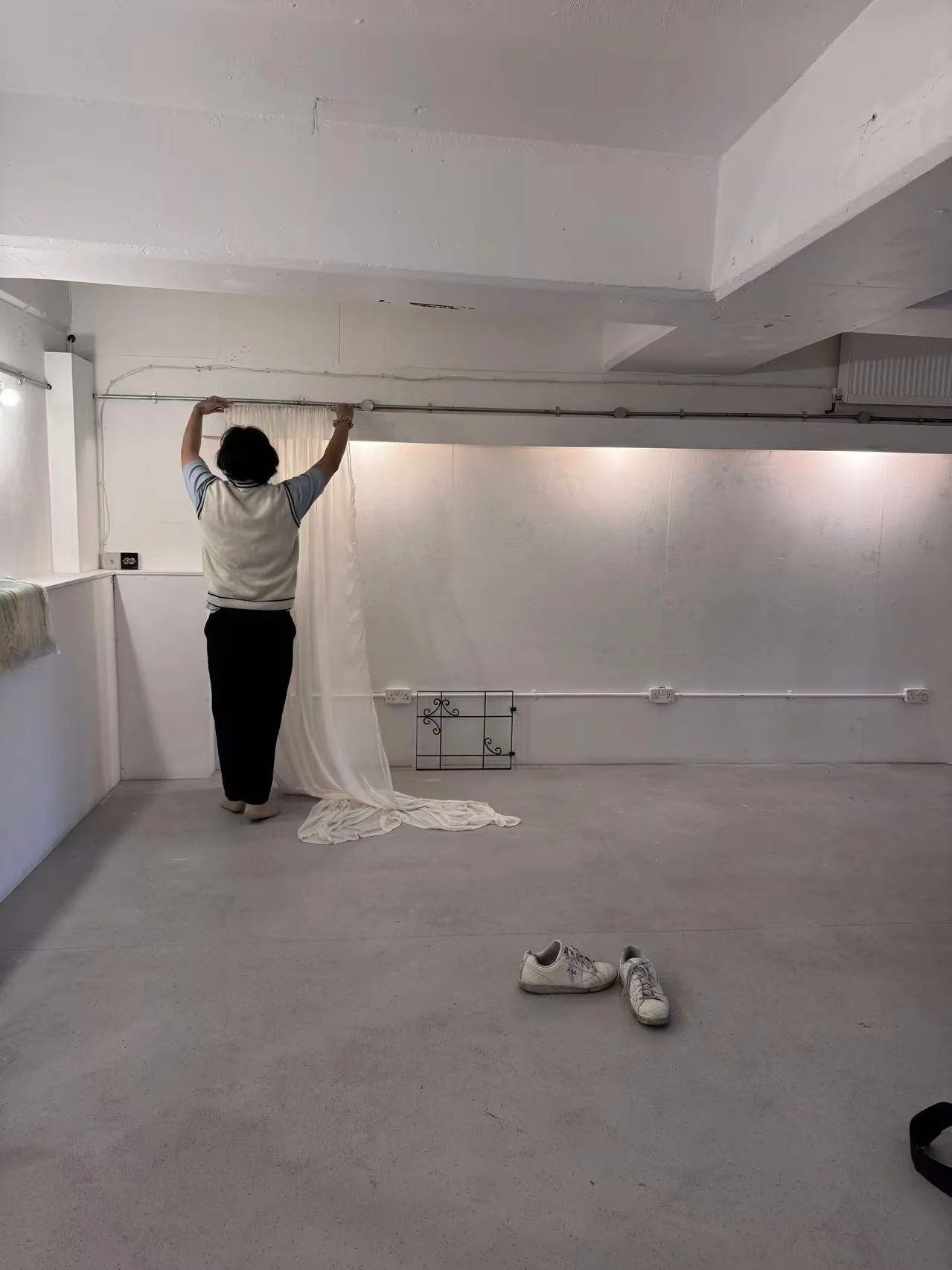
Hanging art works

Put art works on position before hang on the wall
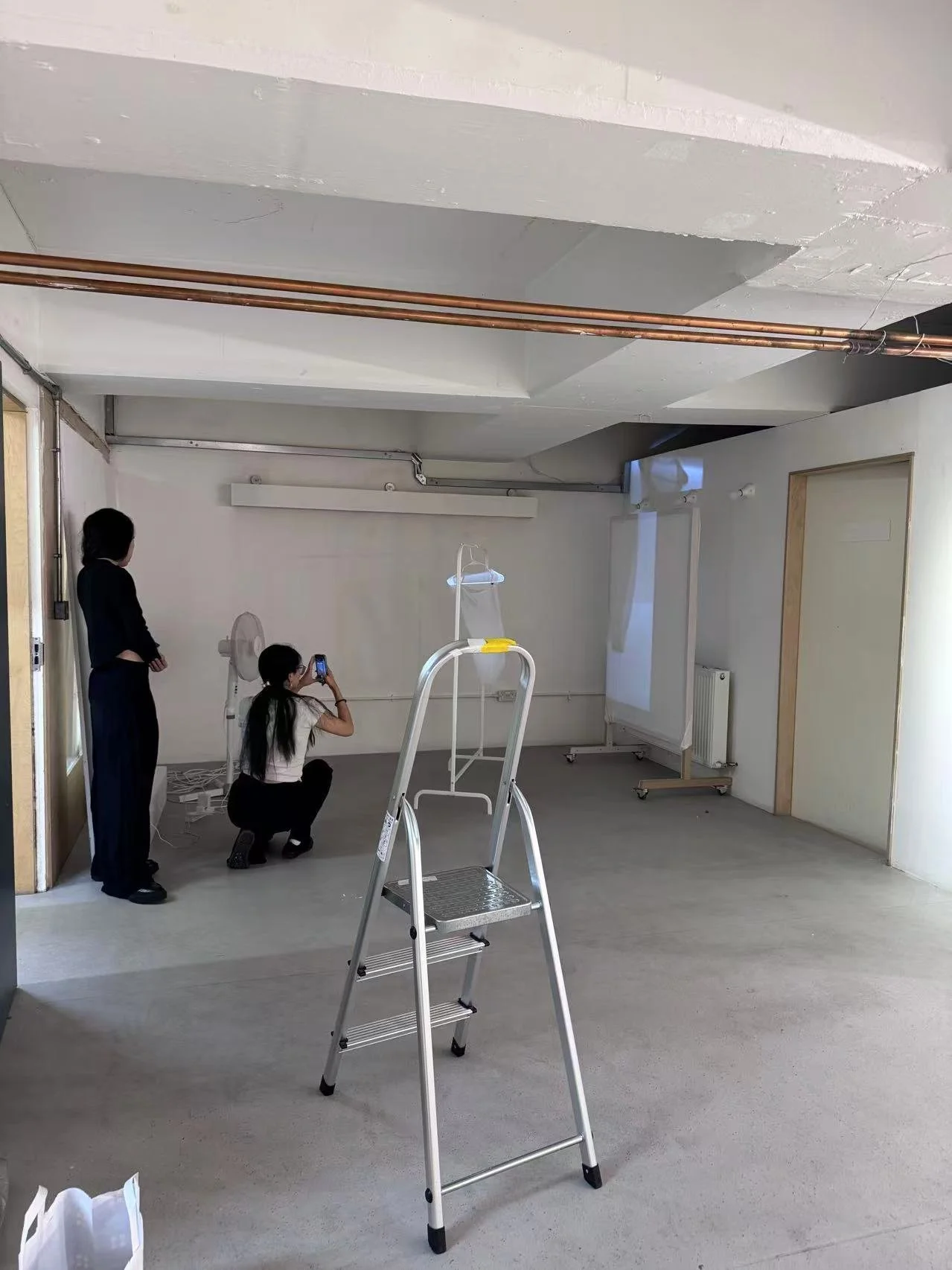
Testing video
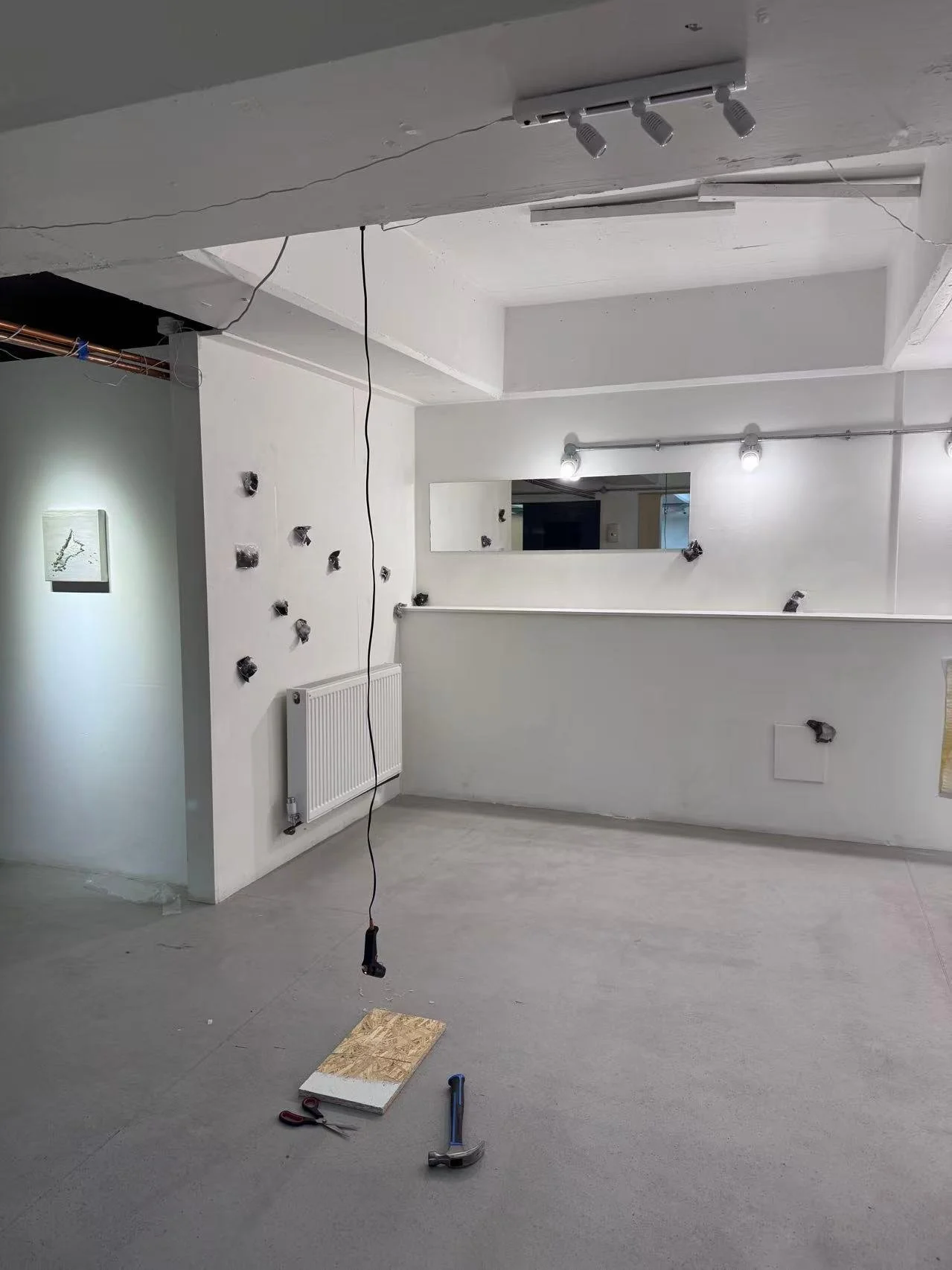
Changing the position of the lights
Monoprint and Lino Workshop Testing
During the summer break, I came up with the idea of creating a printmaking workshop to teach people how to print and enjoy the creative process. To test this idea, my classmate Olesia and I experimented together. We collected vegetables and plants from our apartment and nearby outdoor spaces, then used them as organic materials for printing. We also tried lino cutting and combined these methods to explore different textures and patterns. Through this experiment, we learned how to prepare for the workshop and refined the process step by step. This experience gave us confidence, and we plan to run the workshop in the near future.
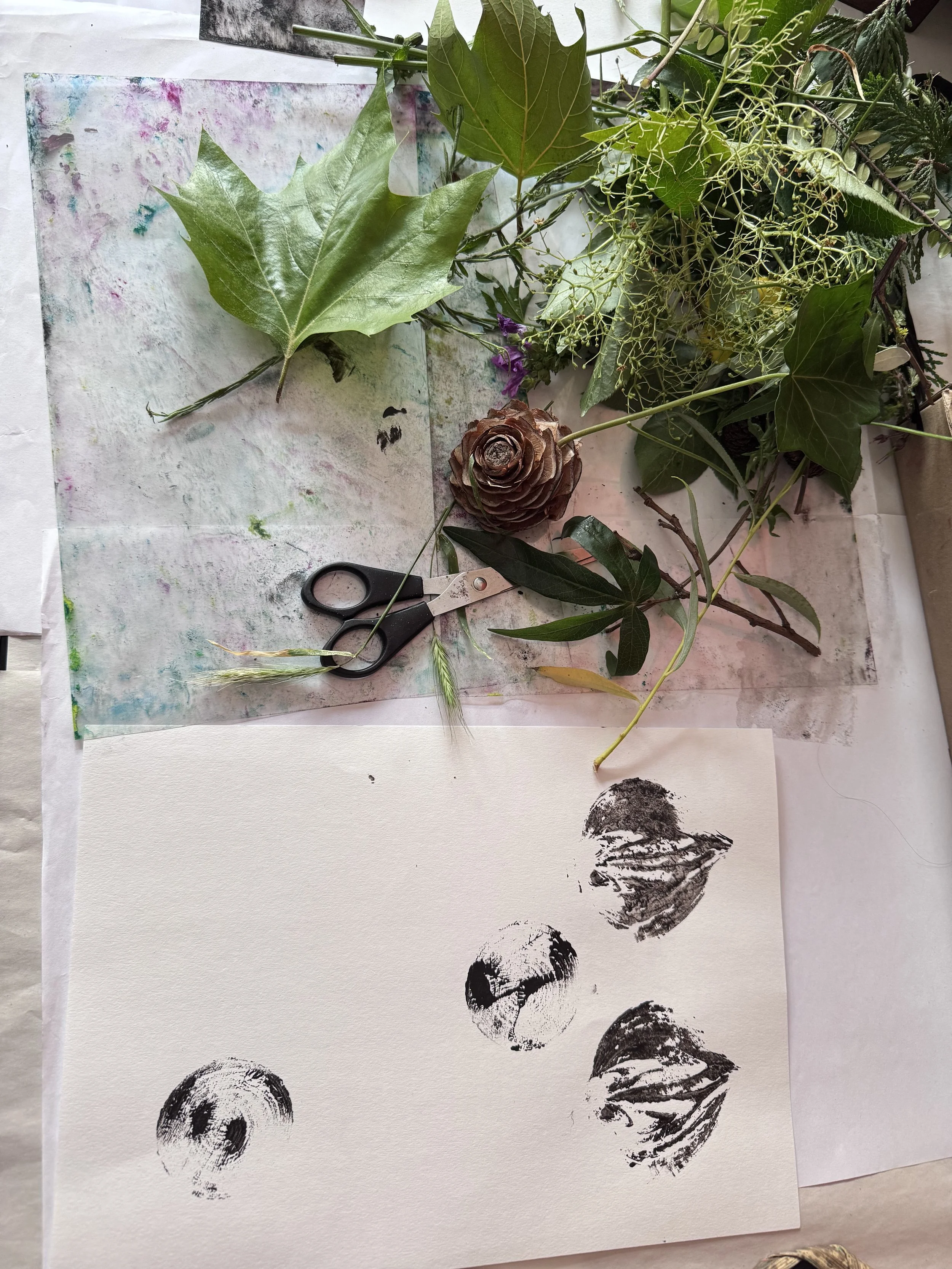
Print from onion
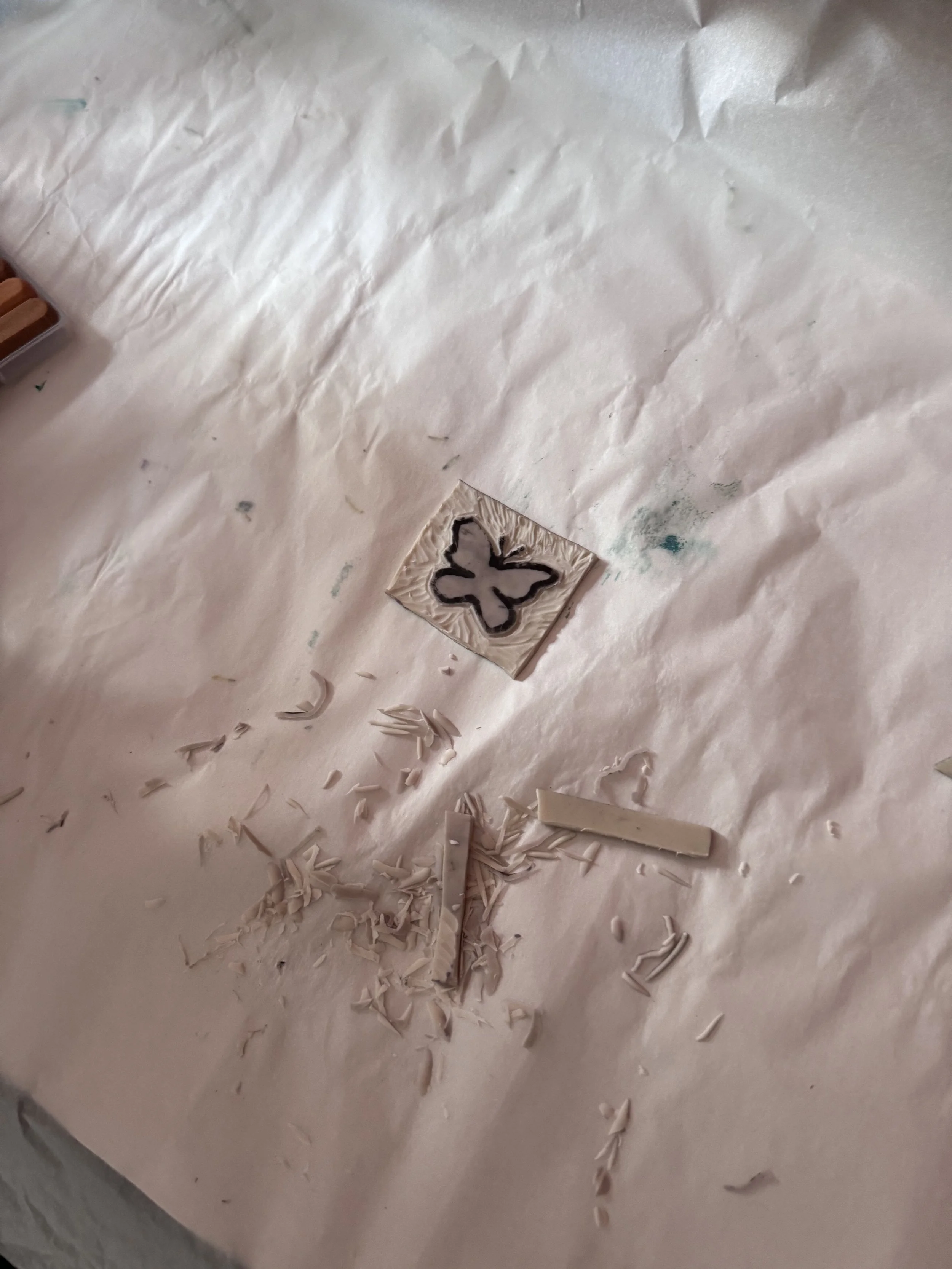
Lino butterfly
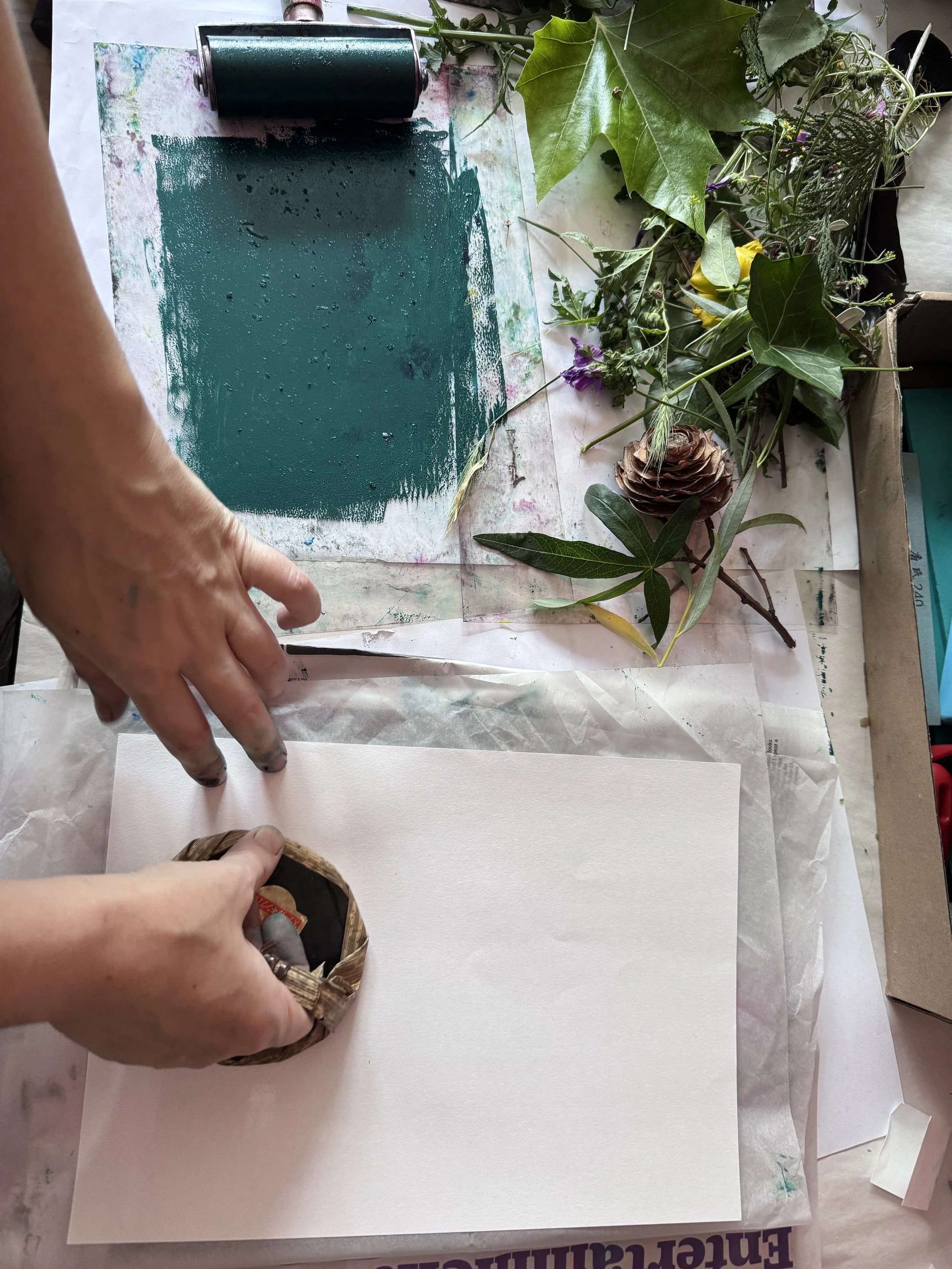
Hand printing
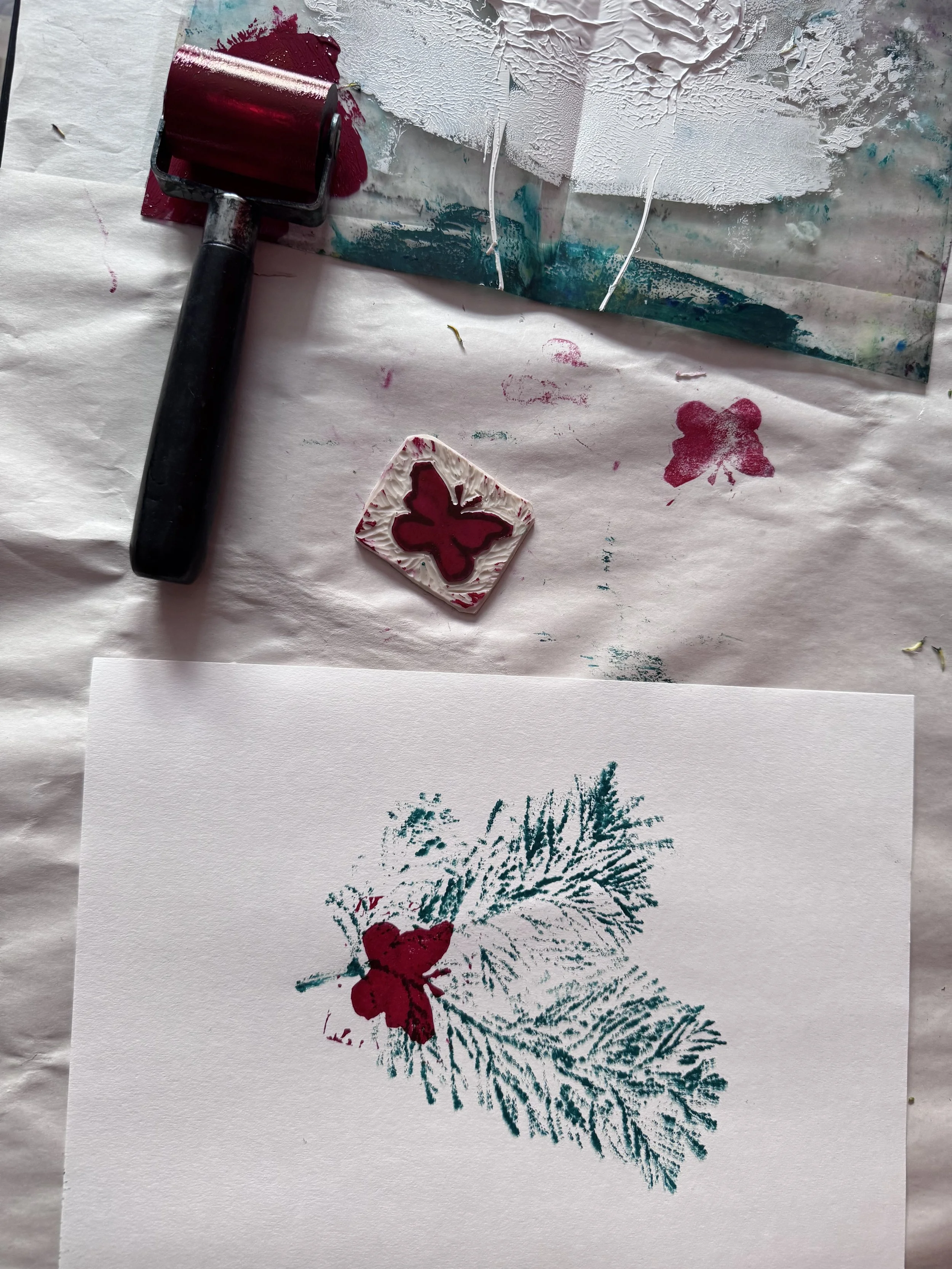
Printed butterfly
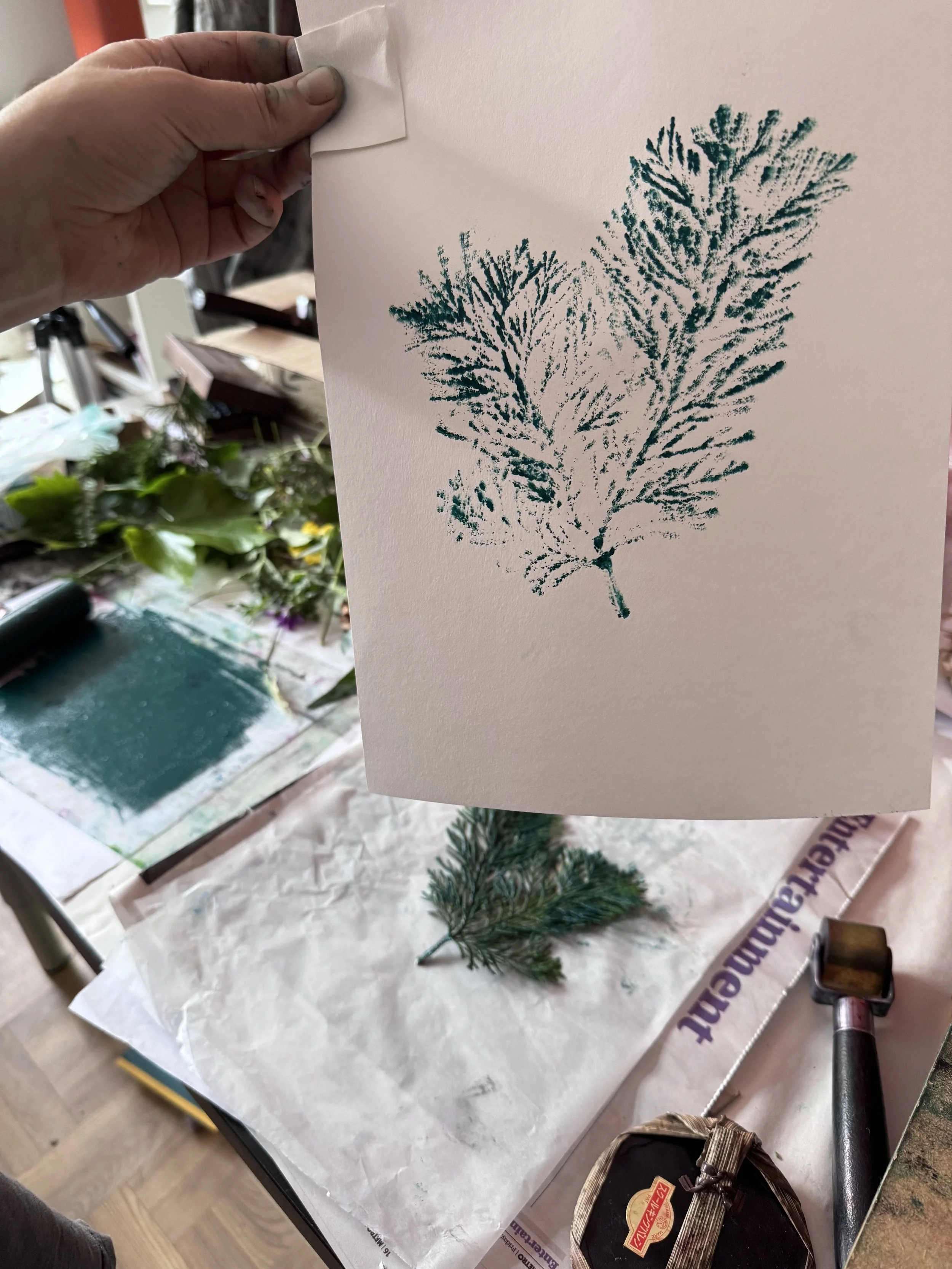
Print from leaf
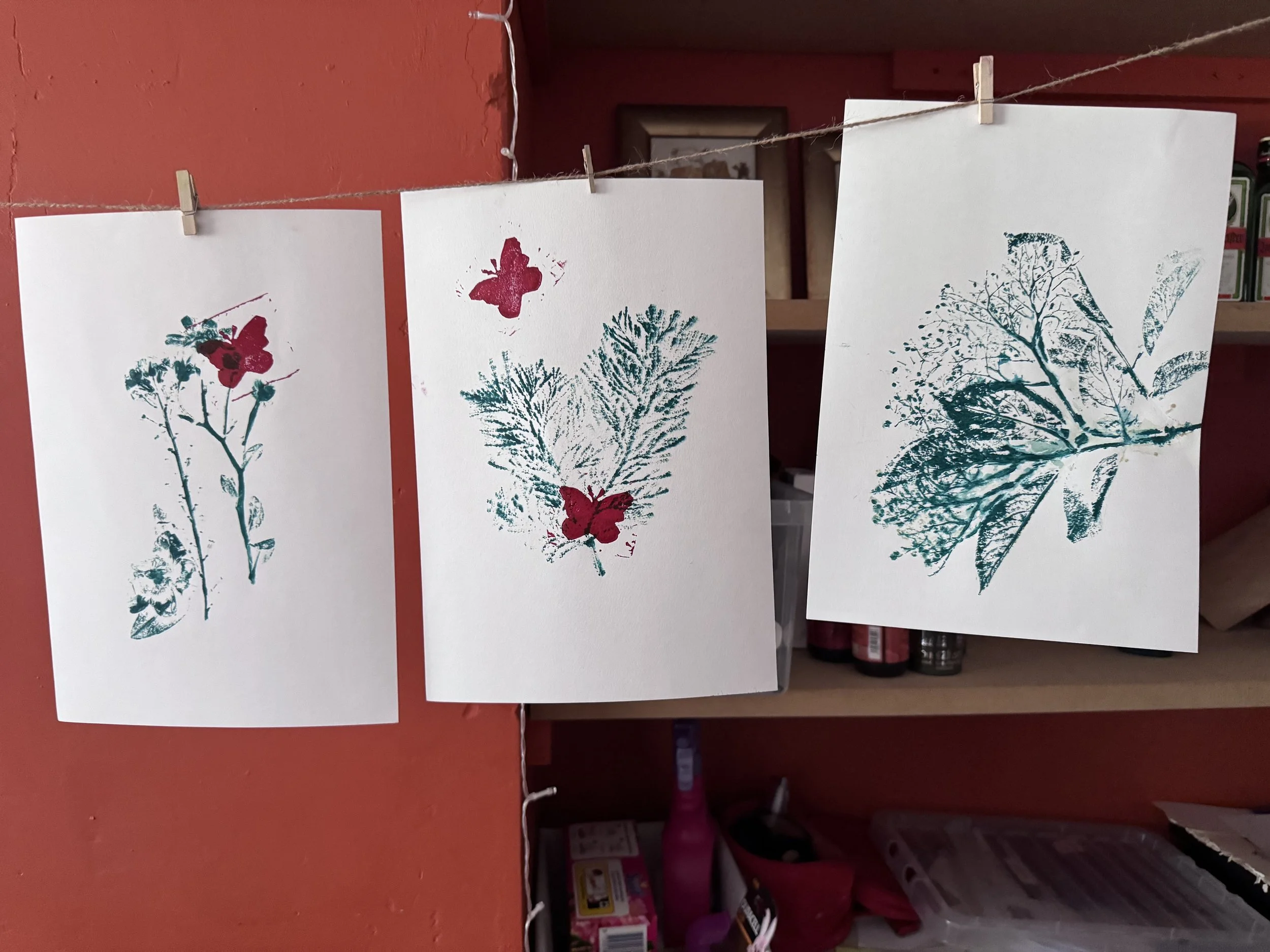
Final work
Ethics & Sustainablity
My practice is grounded in an ethical awareness of materials, environment, and human connection. I consider every stage of production — from sourcing materials to displaying artworks — as part of a larger ecological and moral dialogue. By reusing natural or discarded substances, I aim to highlight the hidden vitality of matter and question the boundaries between life and decay. Sustainability, to me, is not only about ecological responsibility but also about the continuity of thought and existence — how one form transforms into another without waste. I work with processes that minimise environmental impact, valuing slowness, experimentation, and respect for nature’s rhythms. My practice seeks harmony between human creation and the natural world, reminding us that art, like life itself, is part of a shared and fragile ecosystem.