Ludo (Casting Technique)
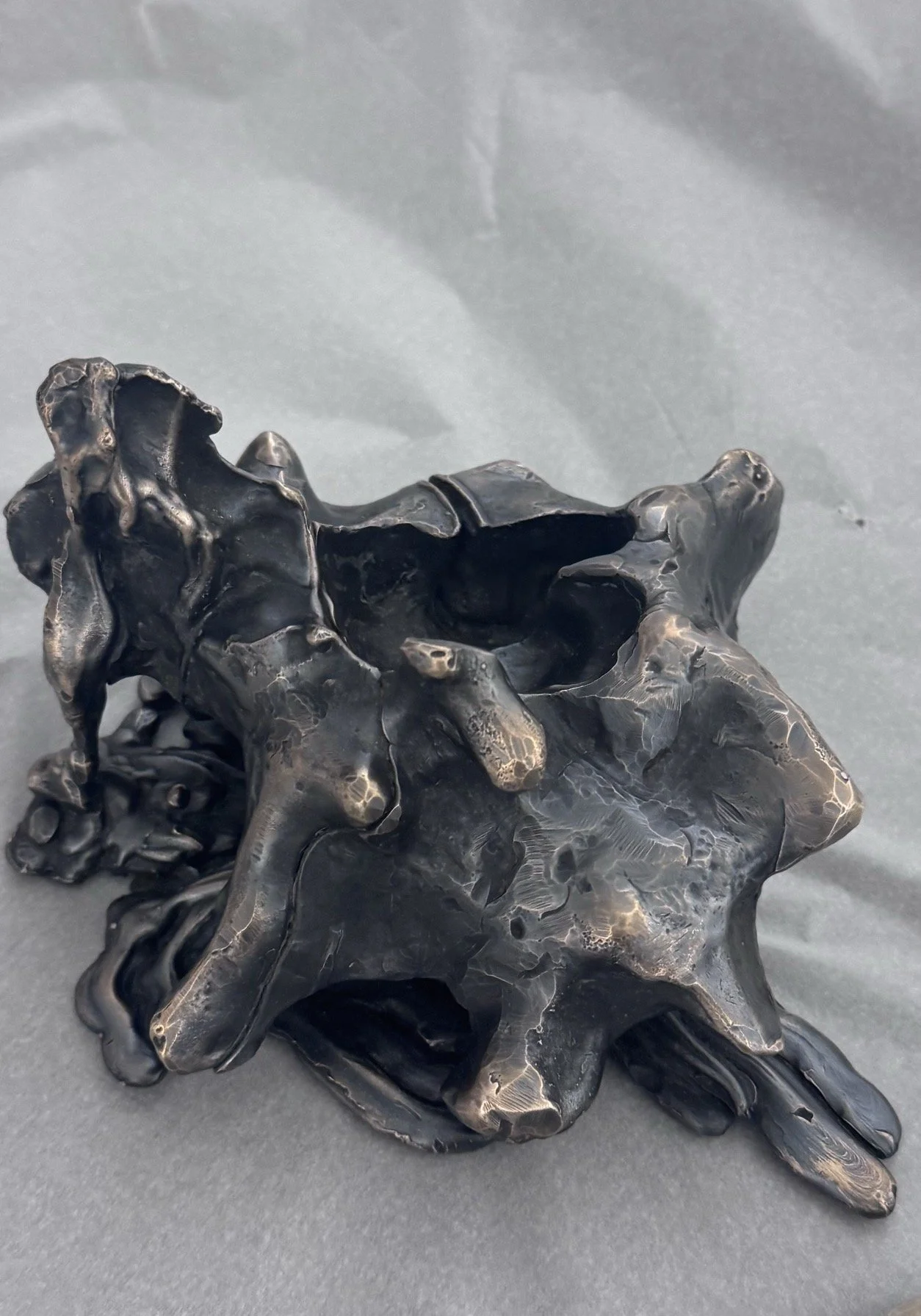
After creating wax castings from the stones and bones I found along the Thames, I began thinking about how to incorporate my own ideas into the work. I wanted to transform the shape of the stones in a natural and intuitive way, allowing them to change form as if through their own actions. I experimented with different melting methods — placing the wax sculptures on a hot plate and in the oven — but the results felt too controlled and awkward.
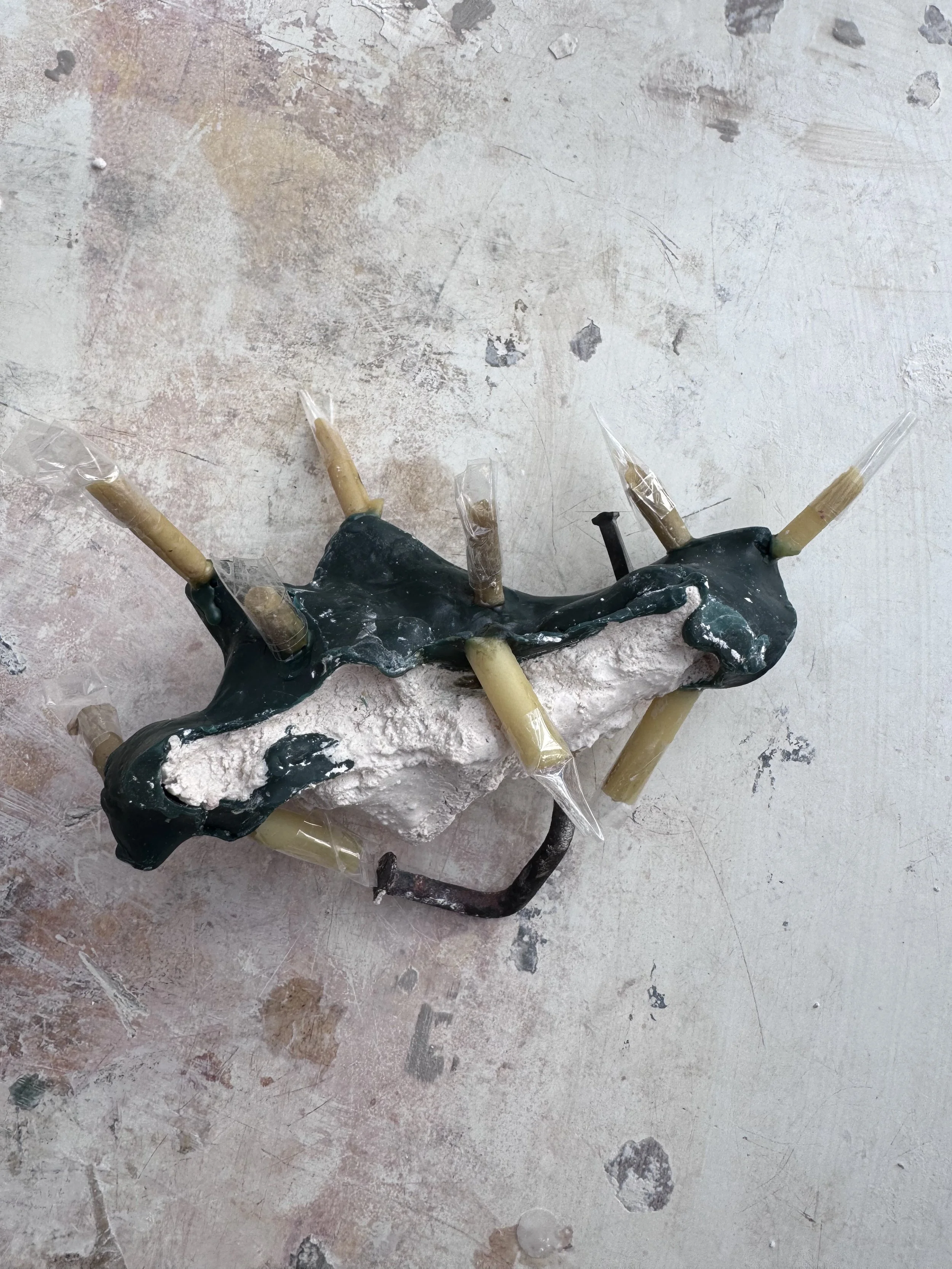
Eventually, I inserted candle wicks into the wax and allowed them to melt organically. The slow burning process gave the forms a sense of natural transformation, as if they were evolving by themselves. I then used these melted shapes for casting, employing the ludo technique to create bronze sculptures. Through this process, I aimed to capture the formation and transience of matter — preserving a fleeting moment and turning it into something eternal.
-
![]()
1. Make the hollow version of the shape and divide into 3 parts.
-
![]()
2. Make the silicone mould of the bottom piece.
-
![]()
3. Make a thin wax layer of the top mold.
-
![]()
4. Divide into 3 pieces.
-
![]()
5. Put nails into the wax.
-
![]()
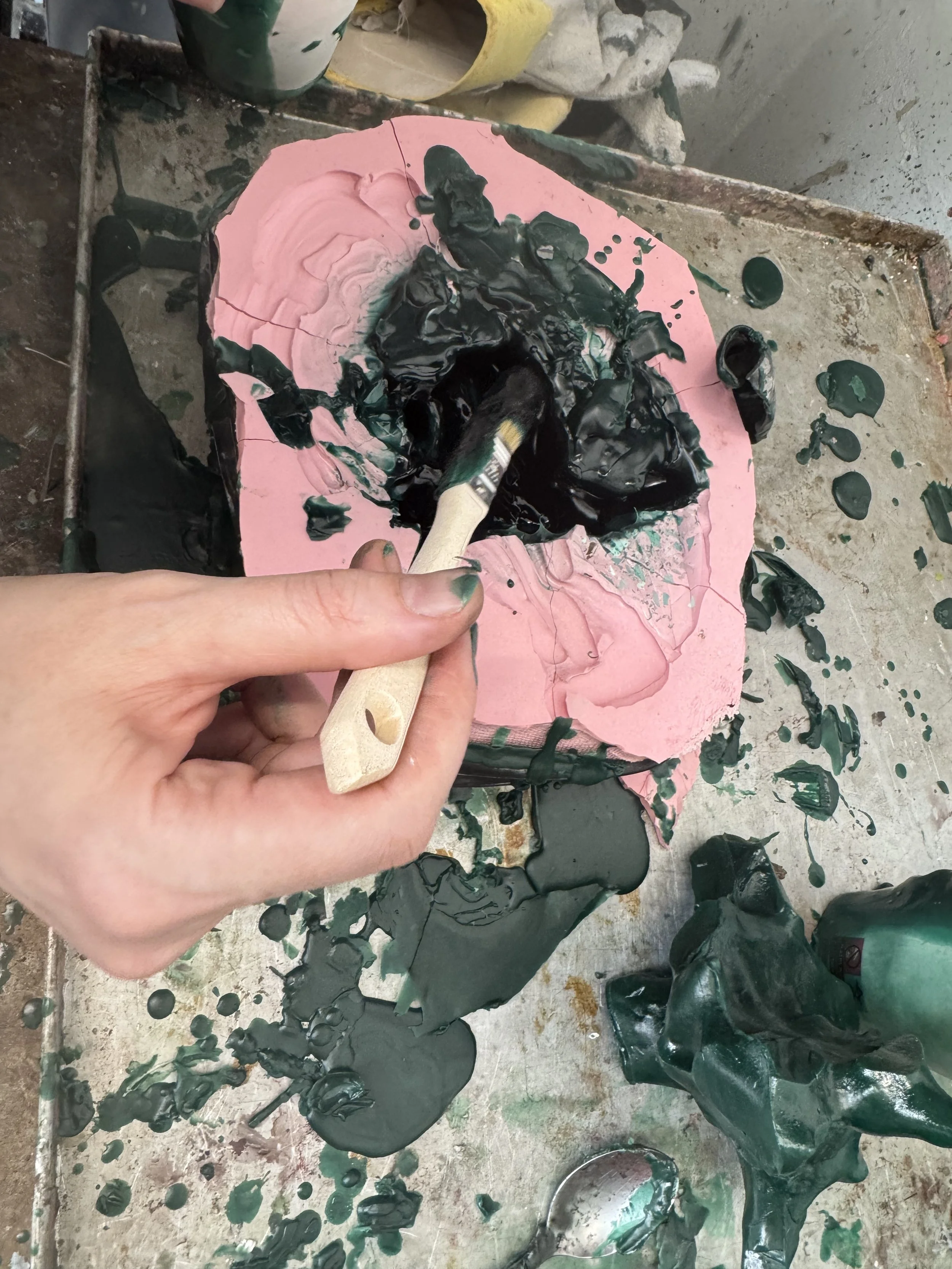
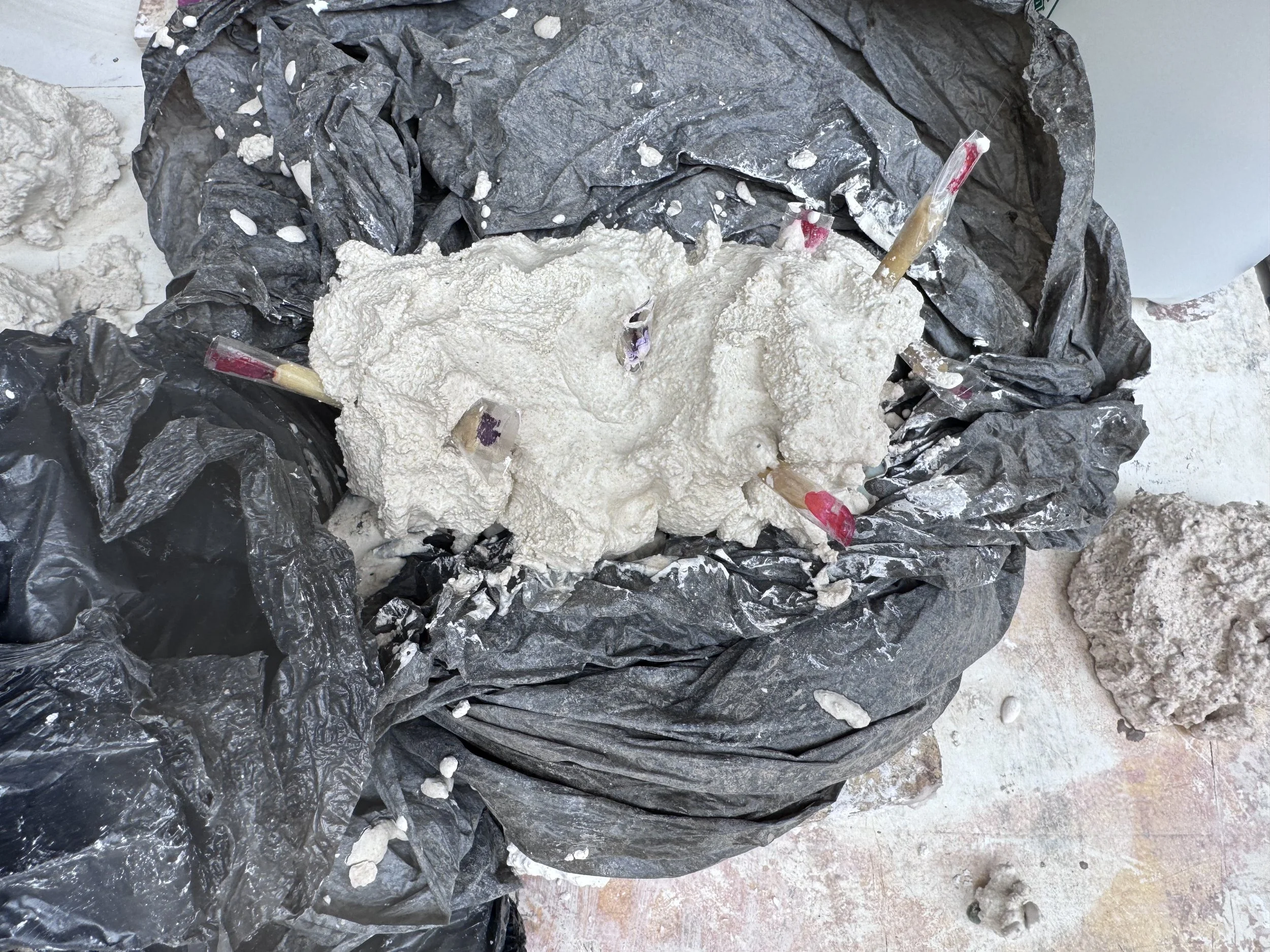
6. Put nails and wax channel into the wax, fill the crushed ceramic grog and plaster mix inside.
-
![]()
7. Put plastic sticker at the end of wax channels and mark the route.
-
![]()
8. Contact all wax channel and a cup on the top then cover with the mixed ceramic grog and Herculite.
-
![]()
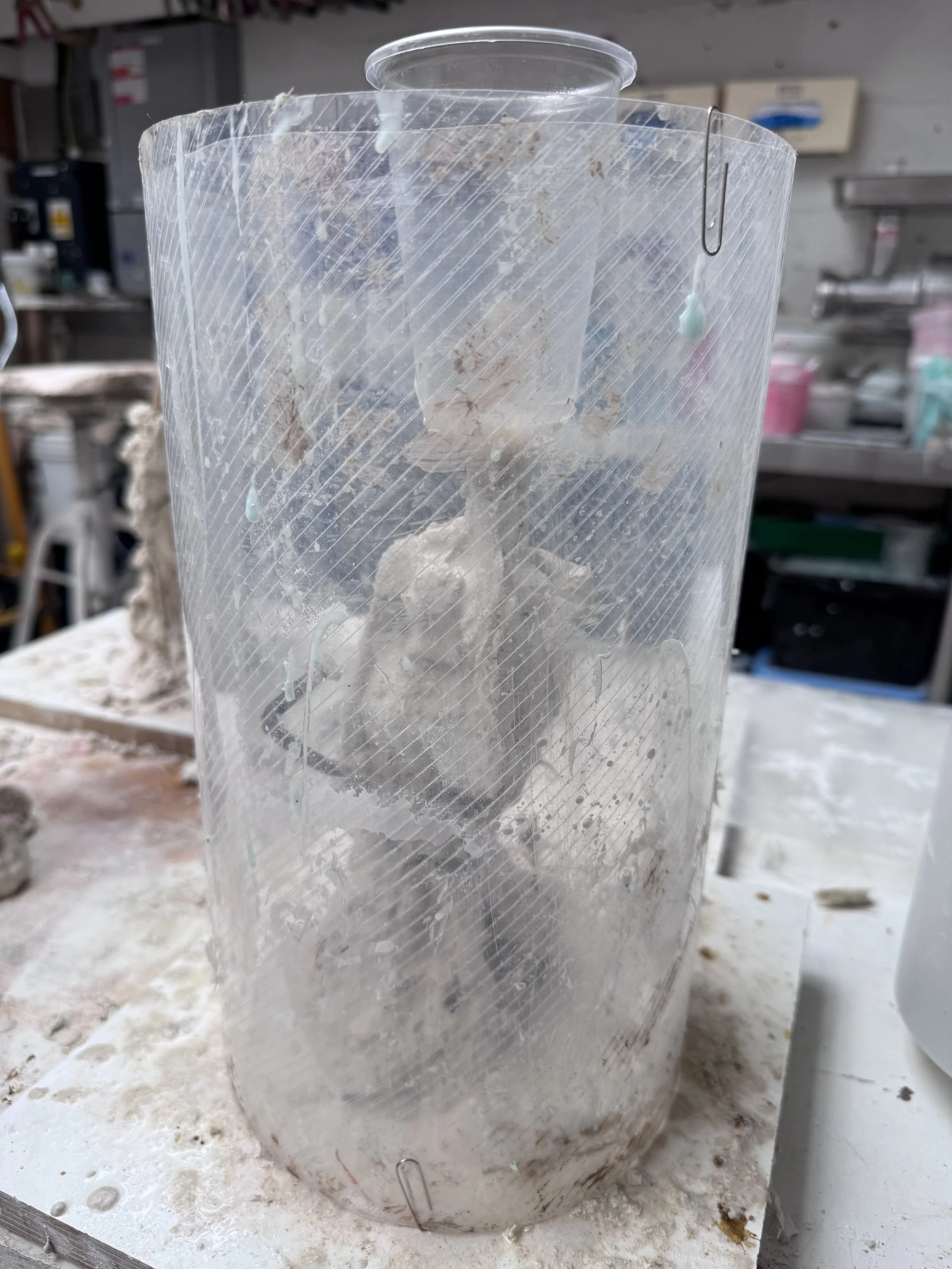
9. Build plastic wall around it and tie it with string.New List Item
-
![]()
10. Filled with plaster and pull the bronze into the cup.
-
![]()
11. Smash the plaster and take out the bronze.
-
![]()
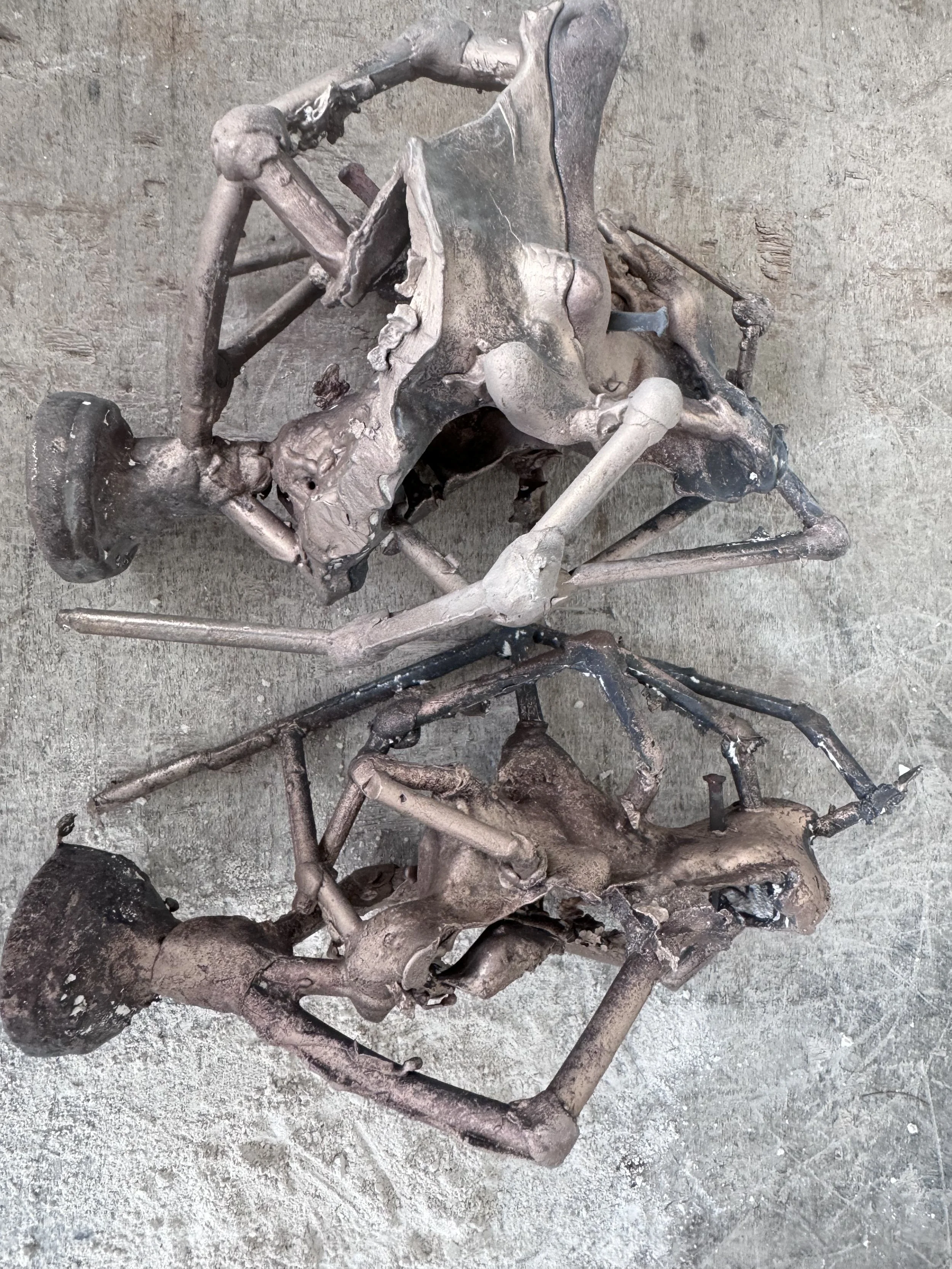
12. Take out the bronze and clean out.
-
![]()
13. Cut the extra part and clean out.
-
![]()
14. Welding the pieces together and choose the patina.
-
![]()
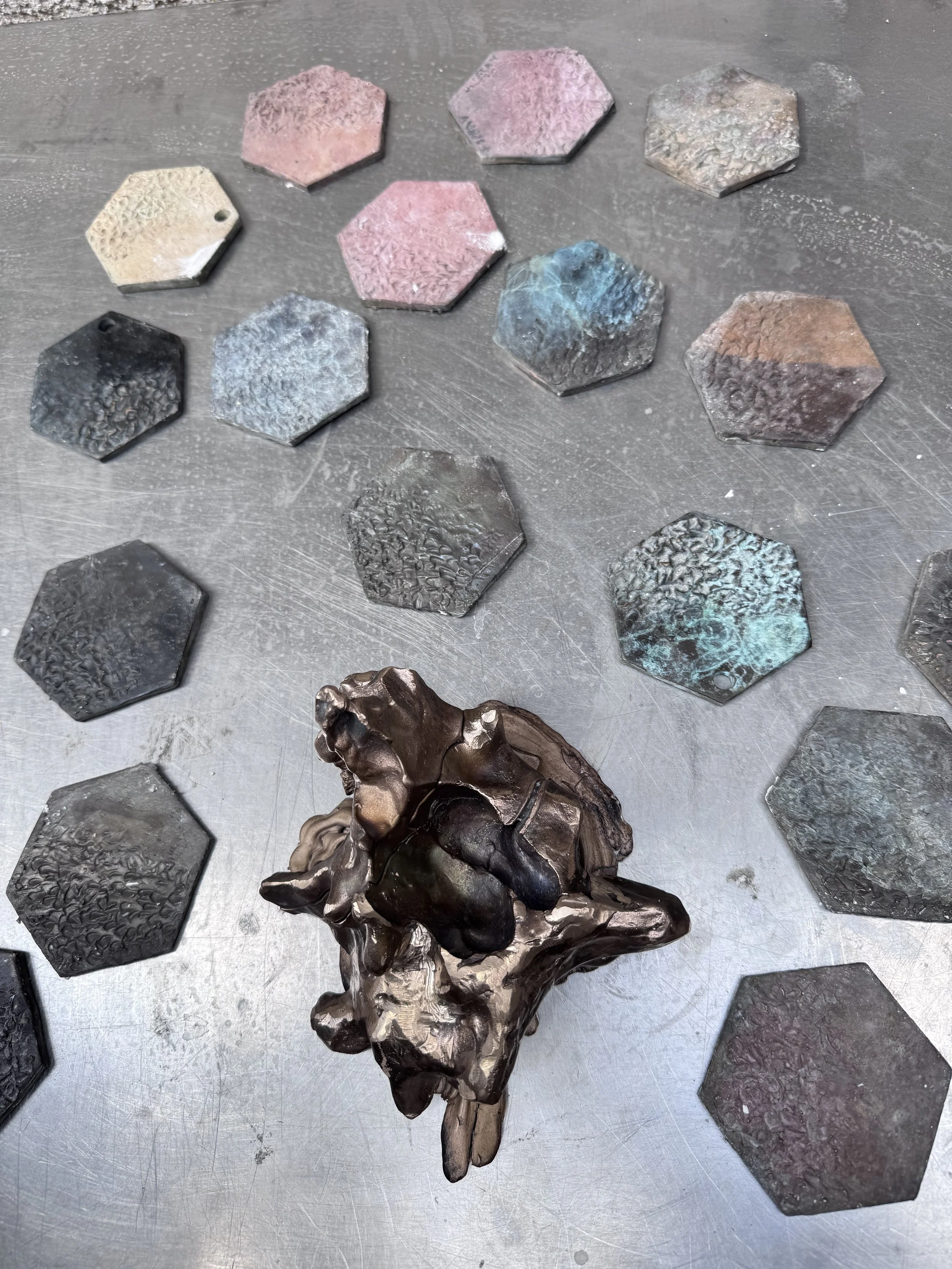
15. Put on the patina and leave it to dry then put wax on top and then polish some part.
-
![]()
16. Polish the top part make it gradually fade.









Chine Collé Combined with Laser Cut (Printing Technique)
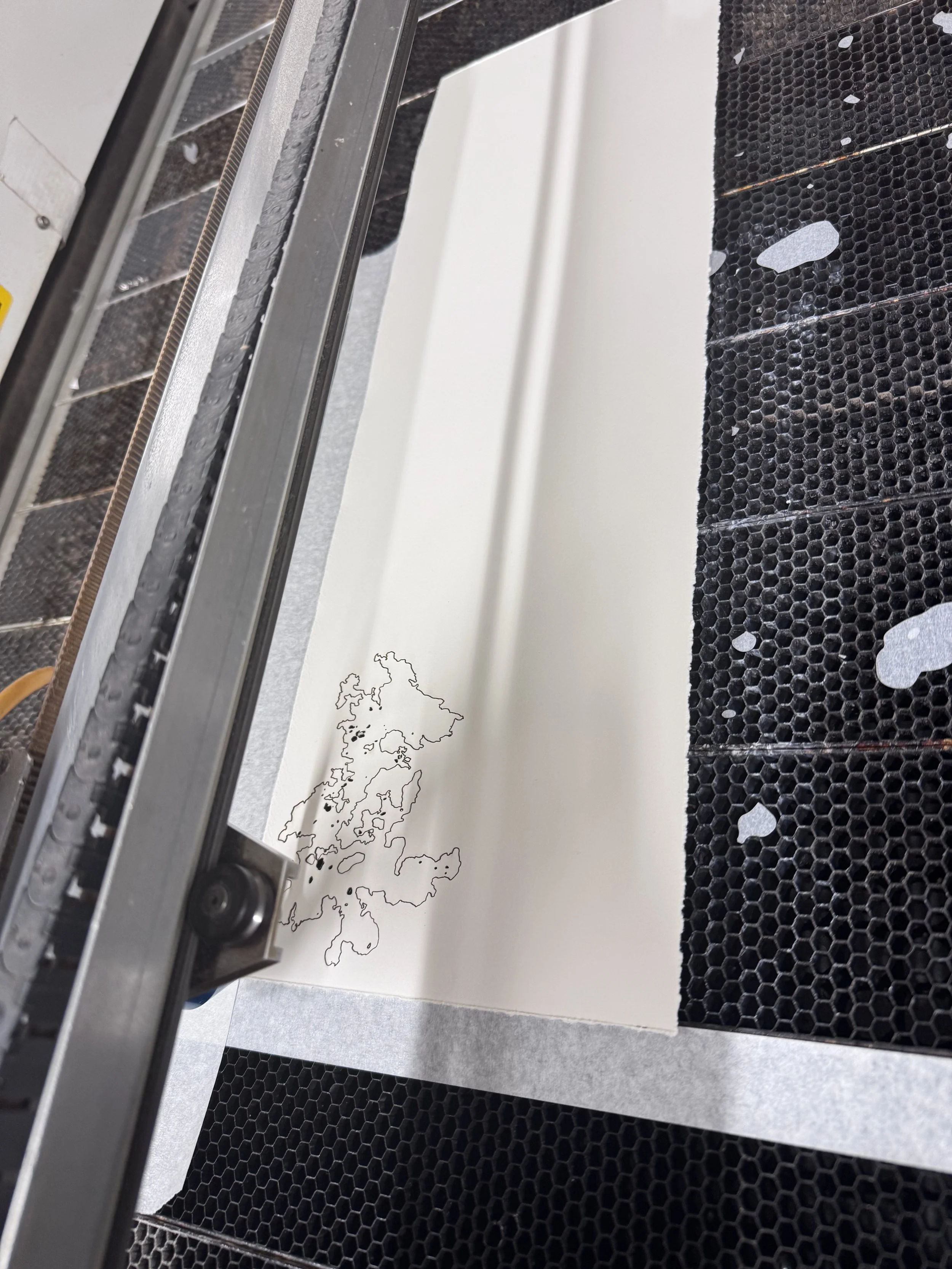
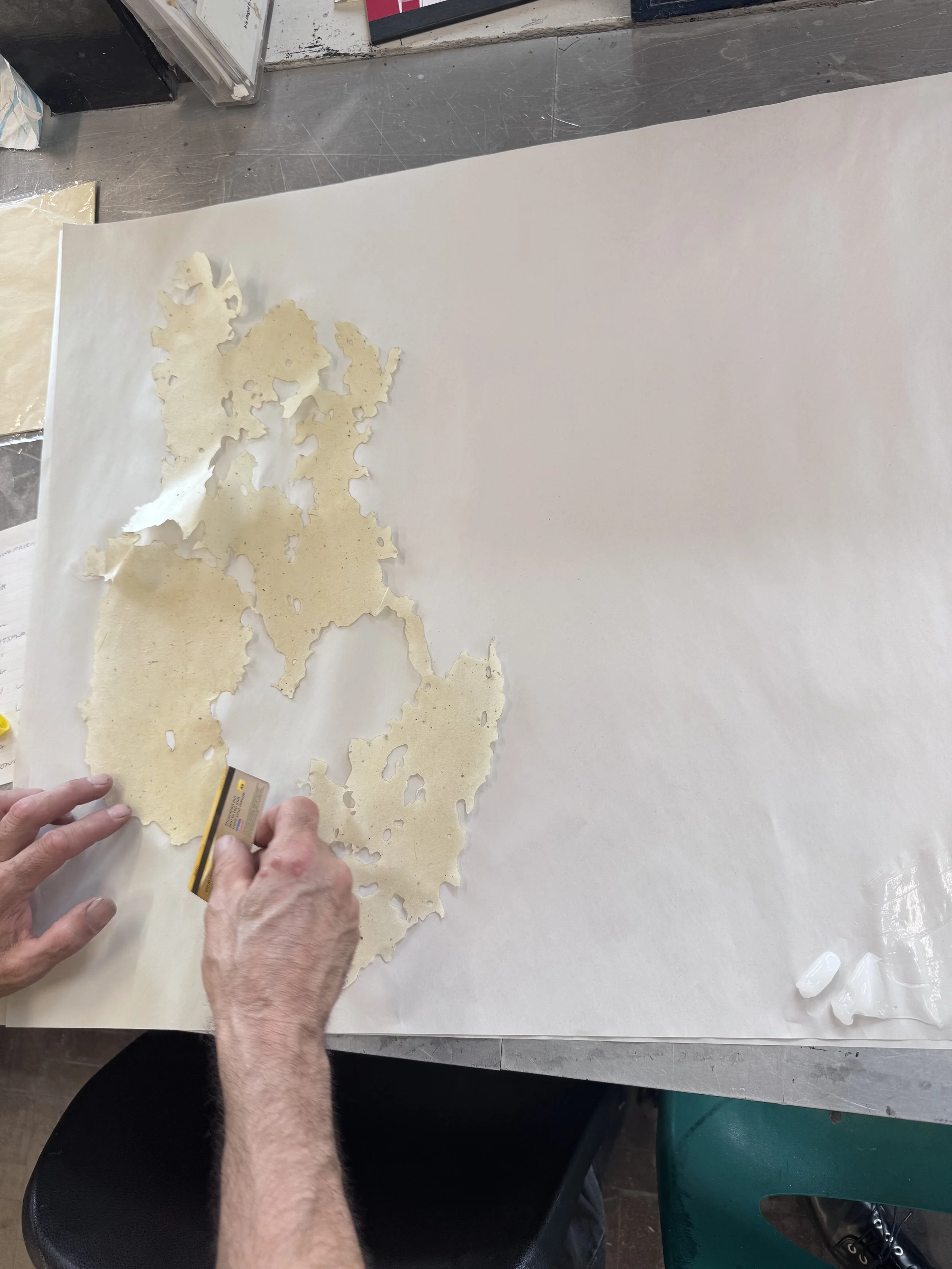
I was inspired by the geometric shapes and lines in Ben Nicholson’s work, as well as the cut-out holes in Simon Callery’s paintings. These influences led me to experiment with incorporating laser-cut techniques into my own prints. I used the shapes of zinc fragments — the remains dissolved from a large zinc plate — as the basis for my designs. By laser-cutting Japanese paper for chine-collé, and sometimes directly cutting shapes into Somerset paper, I created a series of multi-layered prints that explore depth, texture, and the dialogue between absence and presence.
-
![]()
1. Take a photo of the fragment.
-
![]()
2. Edit the photo in Ai and keep the outline as Ai file.
-
![]()
3. Using the laser cut machine to cut the paper.
-
![]()
4. Spray the water on the paper .
-
![]()
5. Put some glue on the back of the paper.
-
![]()
6. Using a card to spread the glue.
-
![]()
7. Run through the press then you have the chine cliné print.





Clay Mould (Casting Technique)
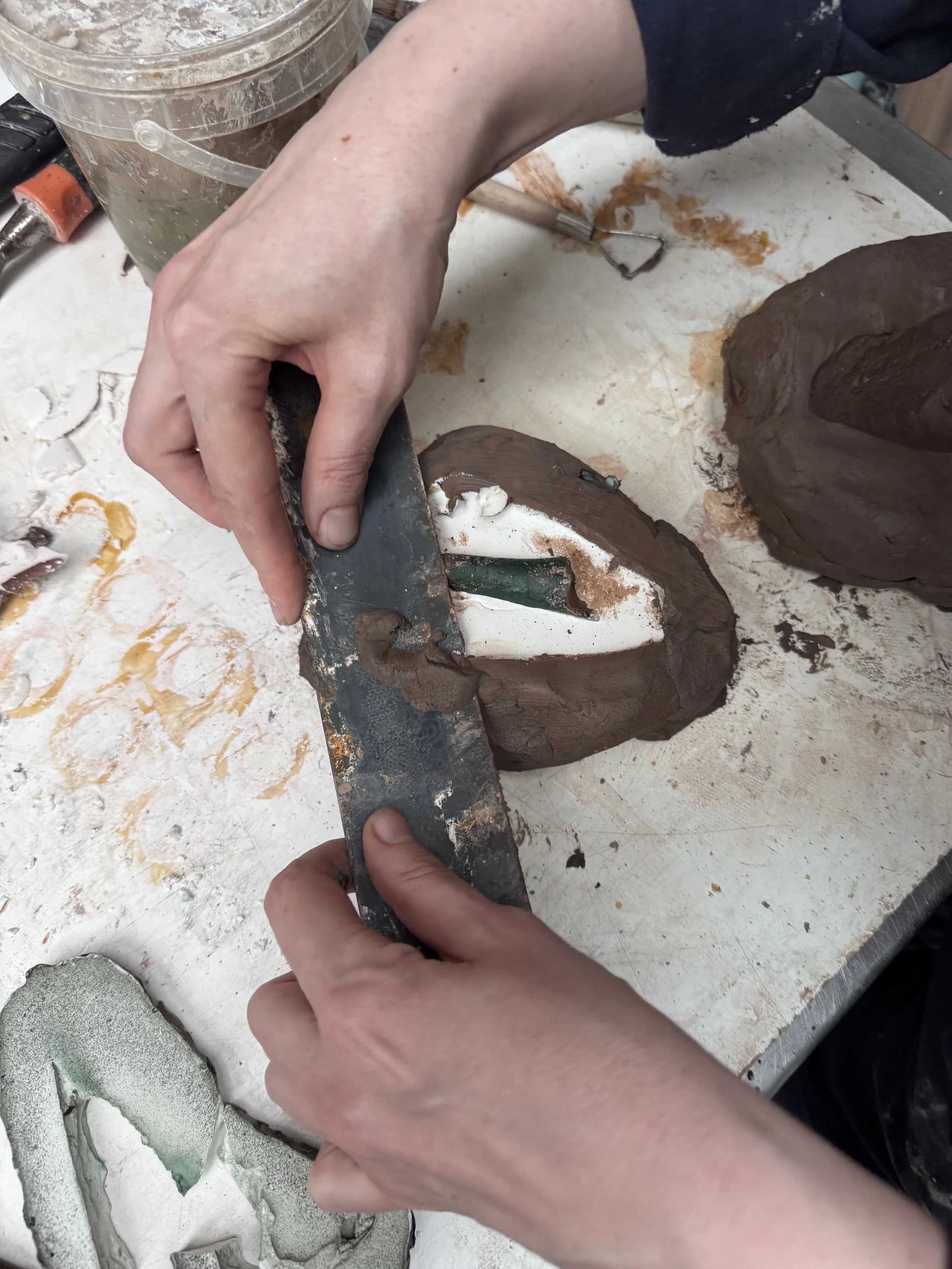
After gaining extensive experience with casting, I learned a new method of making clay molds. This technique is well-suited for creating quick and simple shapes. It is particularly beginner-friendly and faster than using silicone molds. The process involves pressing the object into the clay to create imprints, capturing both sides which can then be joined together. This method is a great option for those looking for a simple and efficient way to make molds. However, it is less precise than silicone molding and does not capture fine details as accurately.
-
![]()
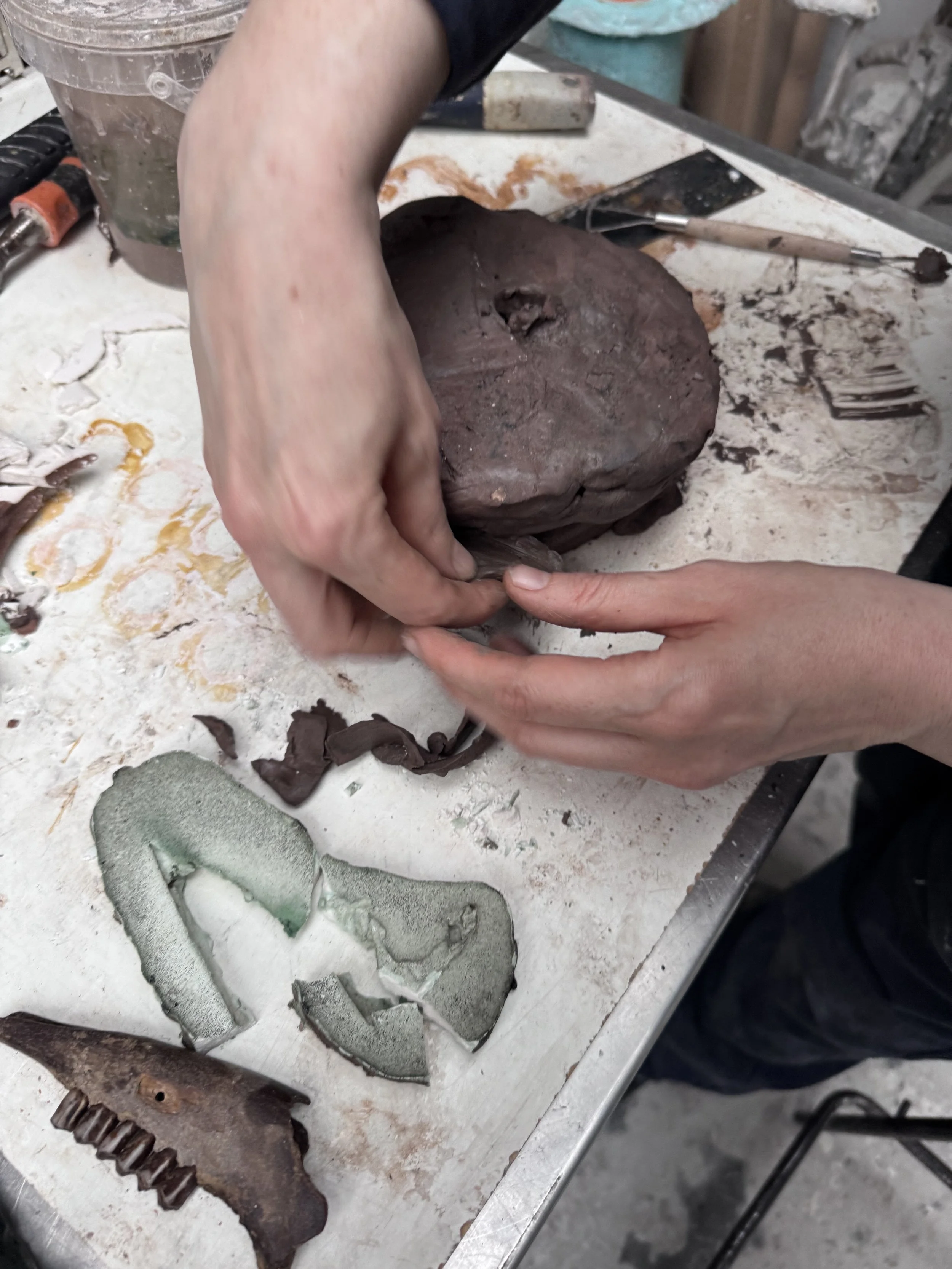
1. Make a thick clay base and put the object into the clay.
-
![]()
2. Press the other half into the clay base the same and put clay wash on the surface.
-
![]()
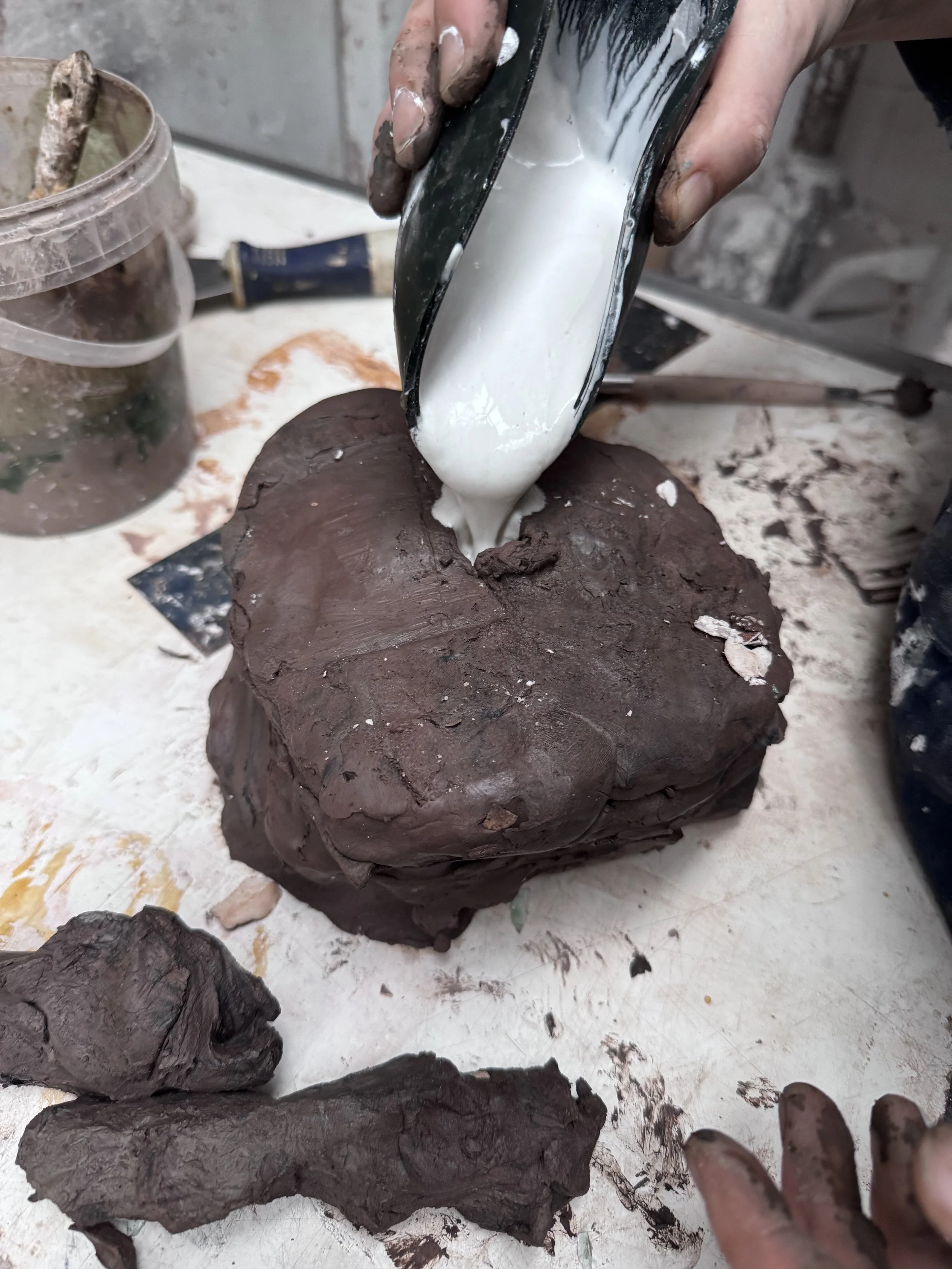
3. Mix the plaster.
-
![]()
4. Pull the mixed plaster liquid into the clay mould and place the other wax object into the plaster .
-
![]()
5. Cut the extra part away.
-
![]()
6. Close the clay mould and use extra clay to steal it and cut a pulling whole on top.
-
![]()
7. Mix another plaster and fill up the mould.


Actisol (Image Transfer Technique)
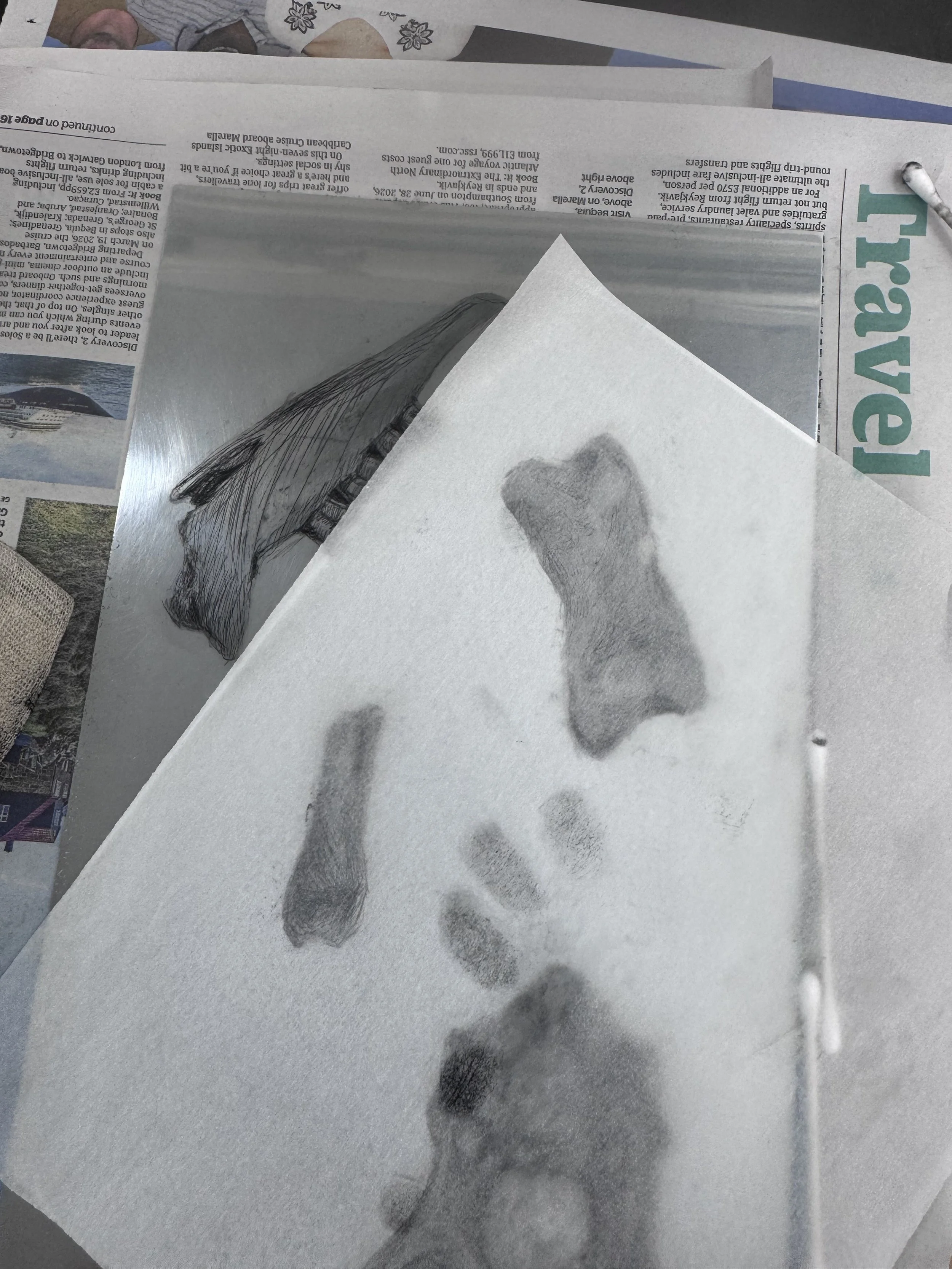
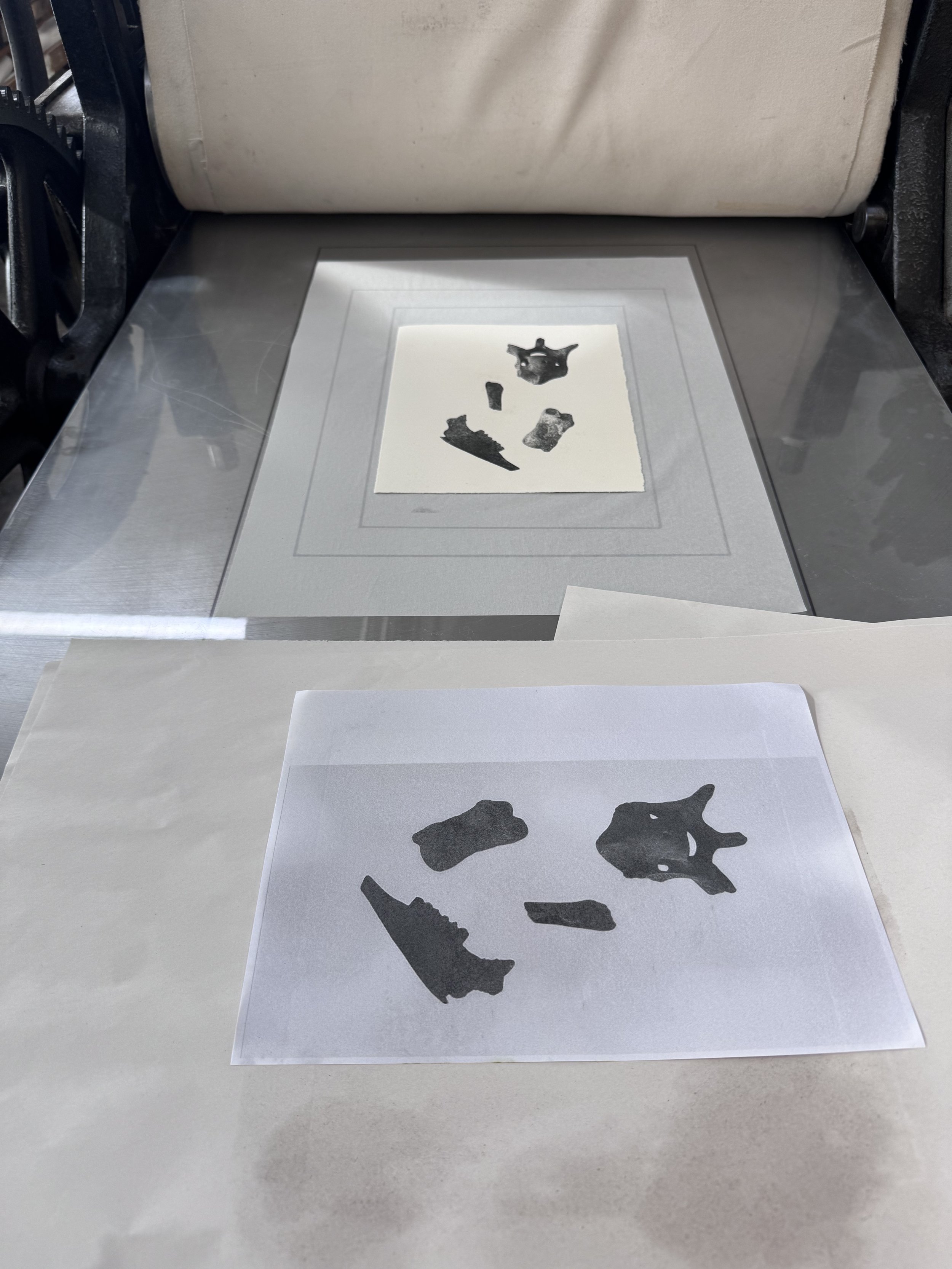
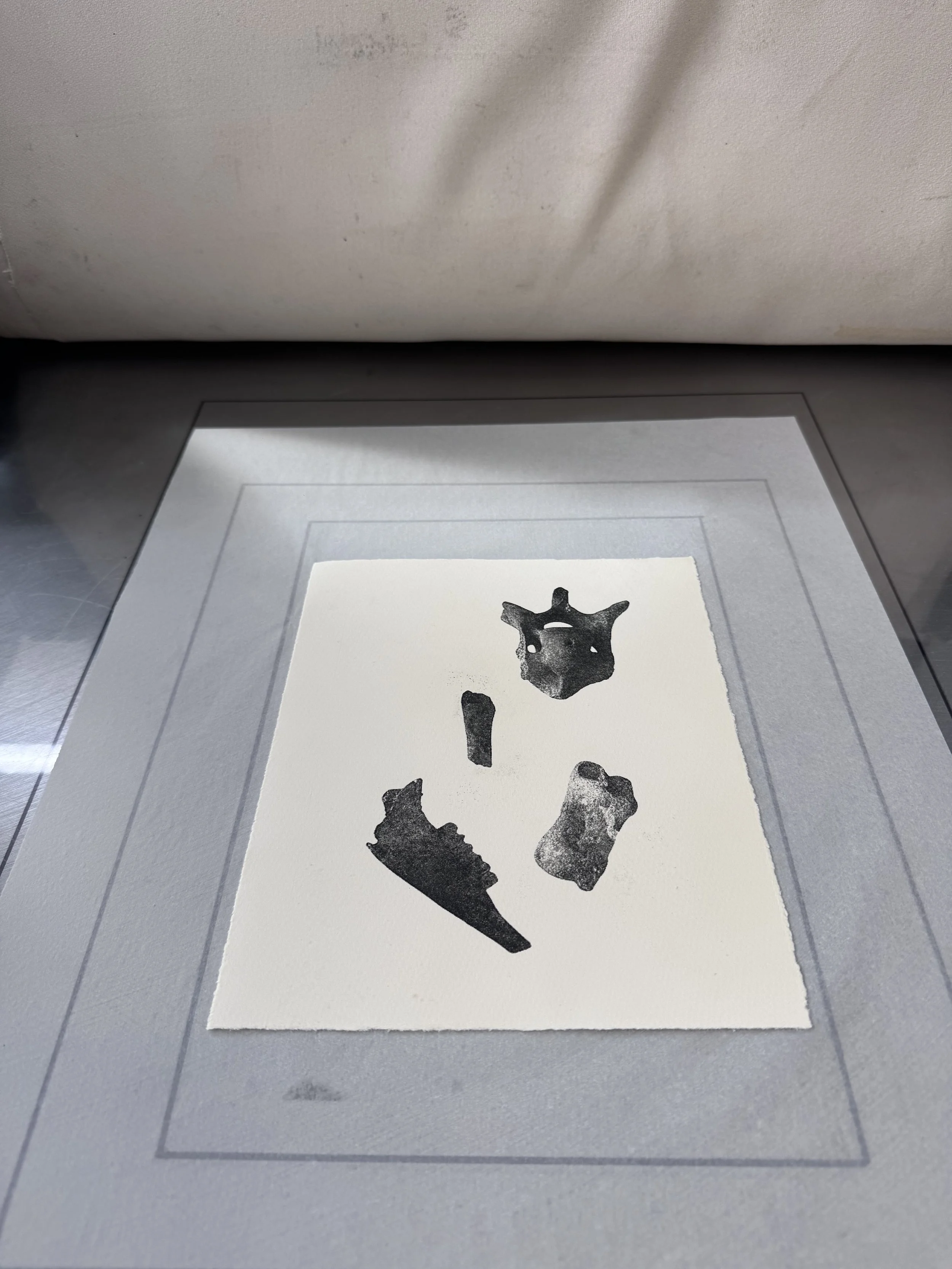
I initially tried making a two-plate print, but I wasn’t satisfied with the drawing on one of the plates, so I decided to experiment with using photographs instead. I transferred the images onto the print, but they appeared too clear and strong, which didn’t blend well with the background. Peter suggested that if I wanted a blurrier, more fragmented effect, I could try using Actisol. I experimented with this technique and found it quite appealing. However, I am still considering whether to combine it with etching, and I will make that decision later.
-
![]()
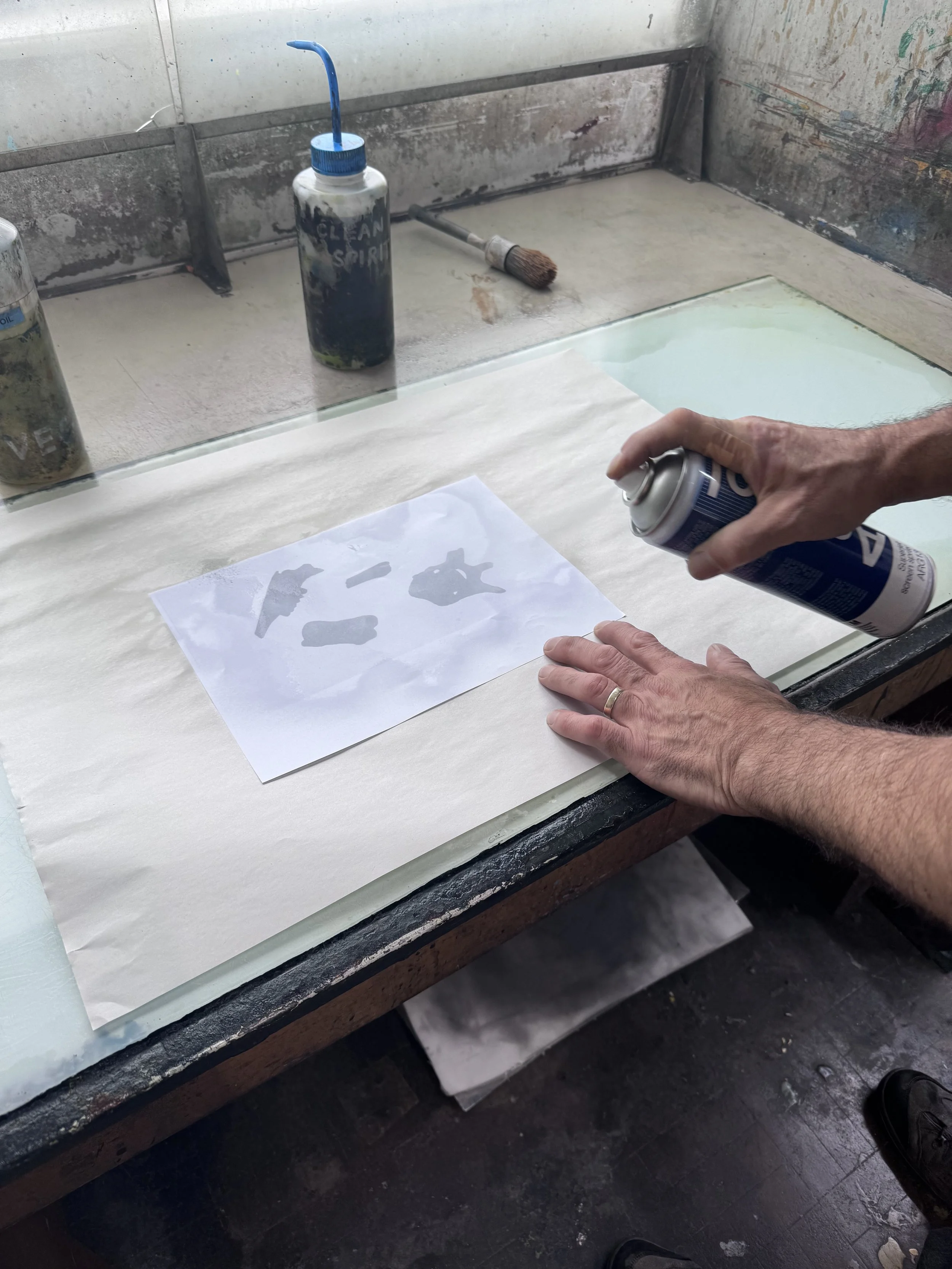
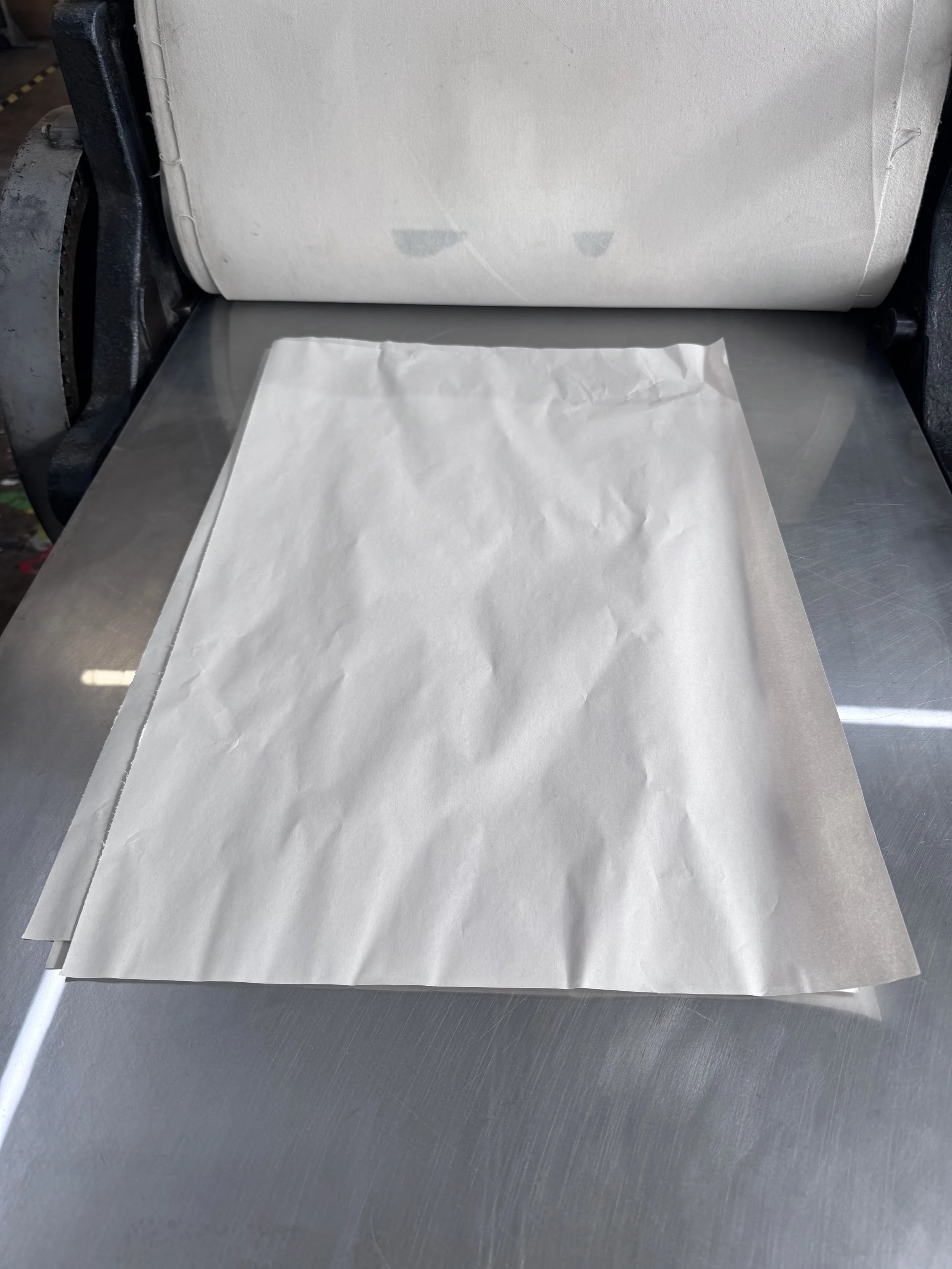
1. Prepare the image print on A4 paper and some newspaper and tissue.
-
![]()
2. Spray the Actisol on the back of image just to wet the paper .
-
![]()
3. Put the image paper on top of the printing paper.
-
![]()
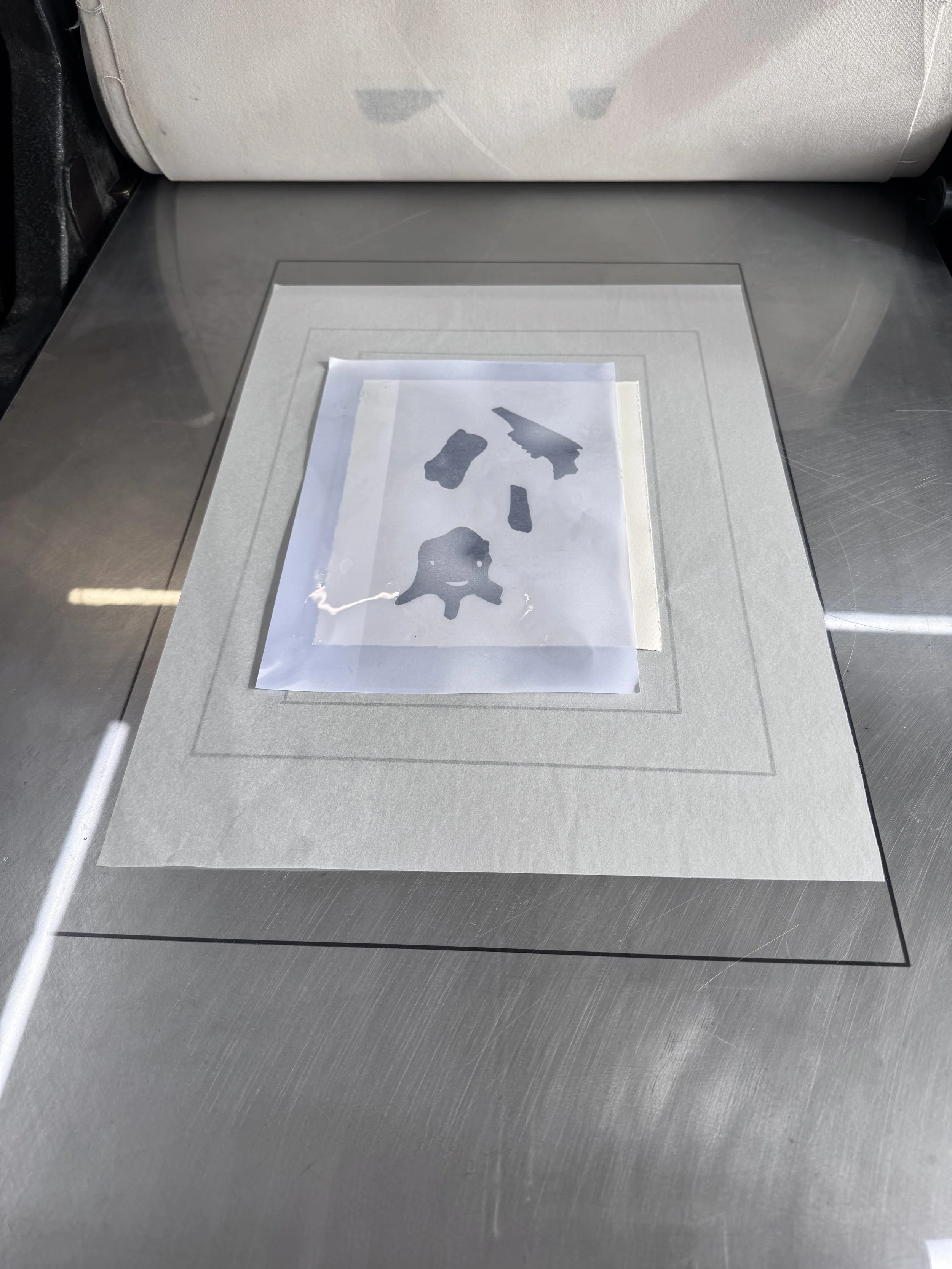
4. Cover with some newspaper and go through the press.
-
![]()
5. Then you have the image trsfered into the paper.
-
![]()
6. Close look at the print.

Two Plate Print and Á La poupée (Printing Technique)
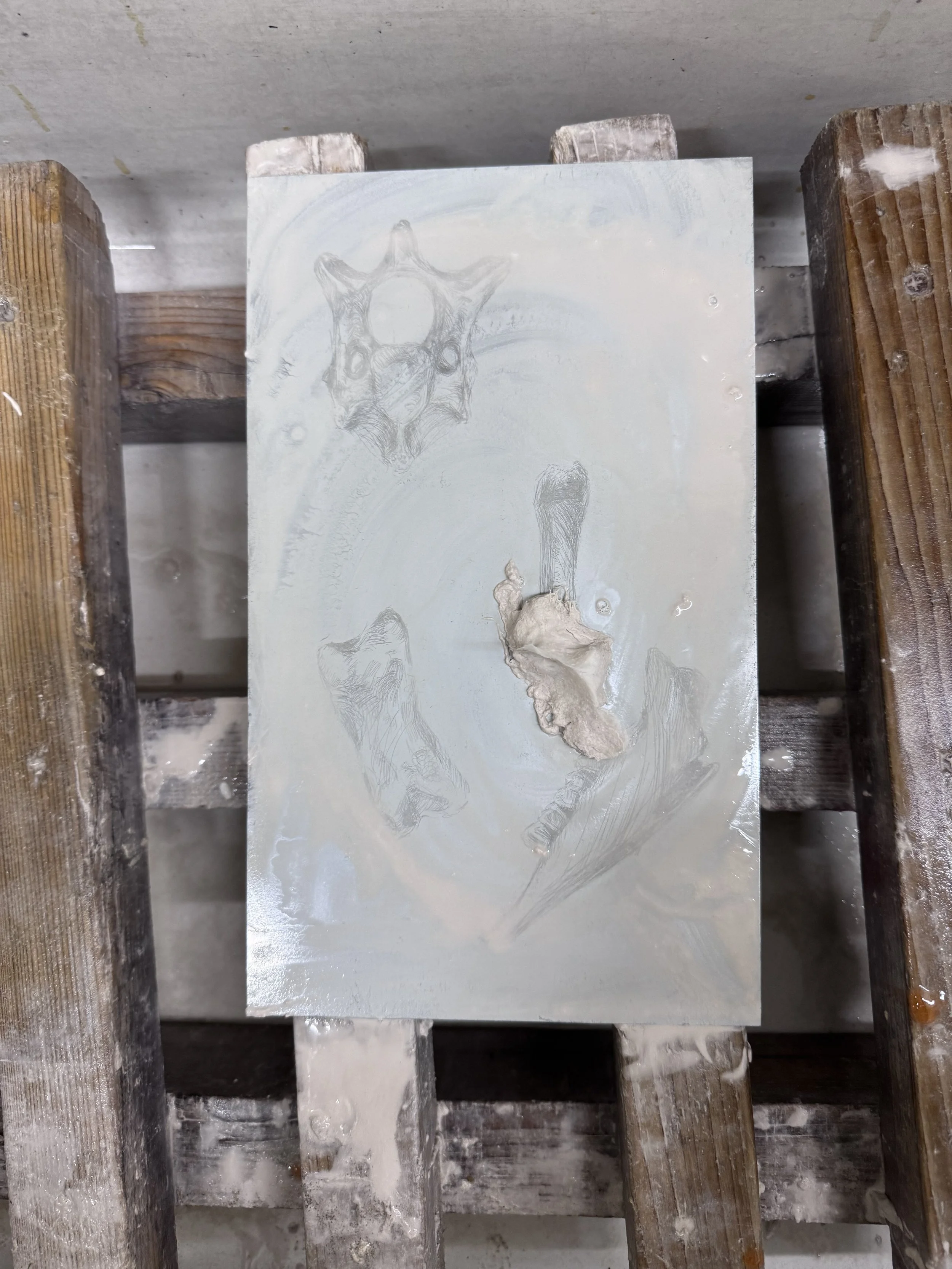
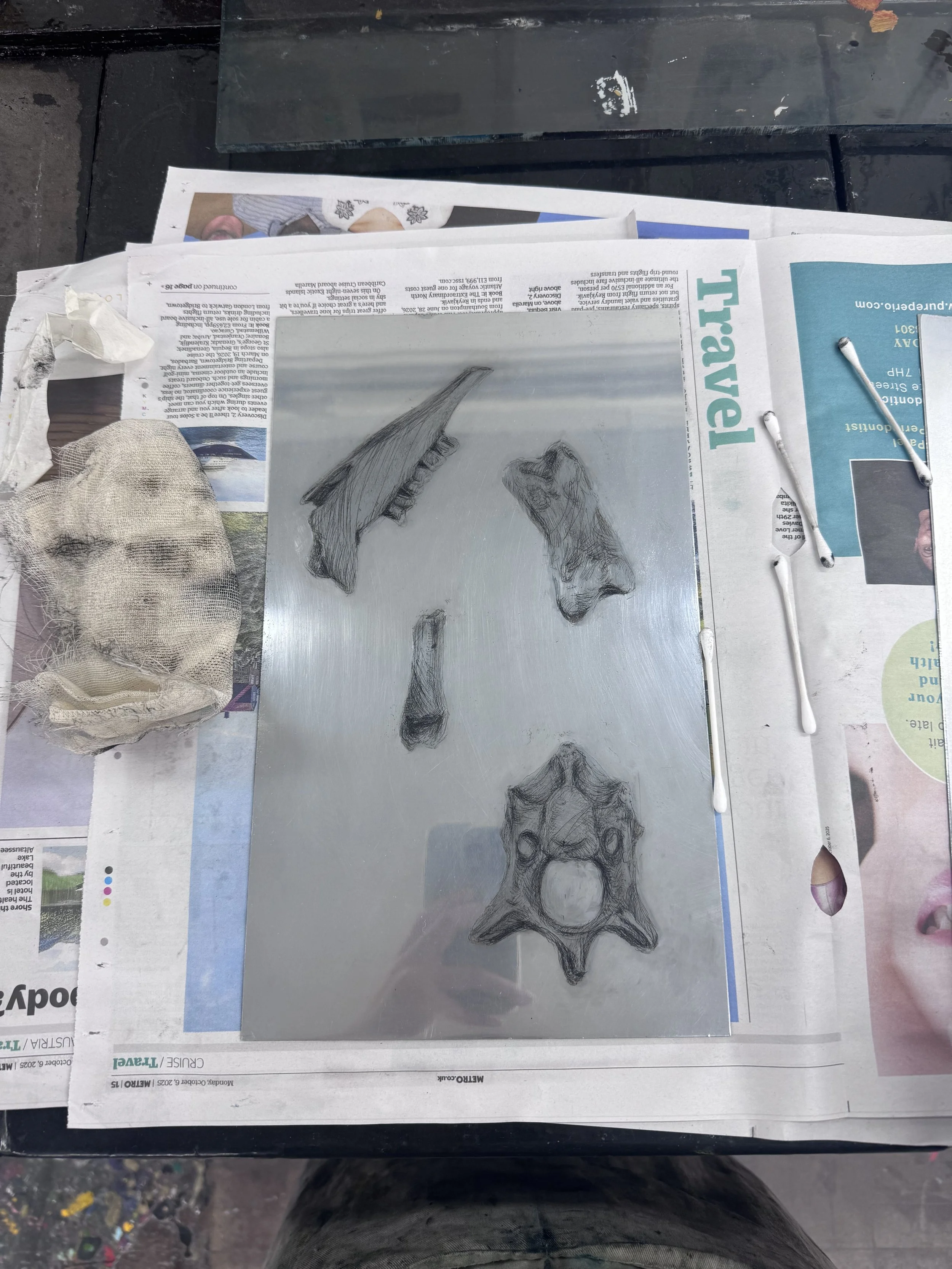
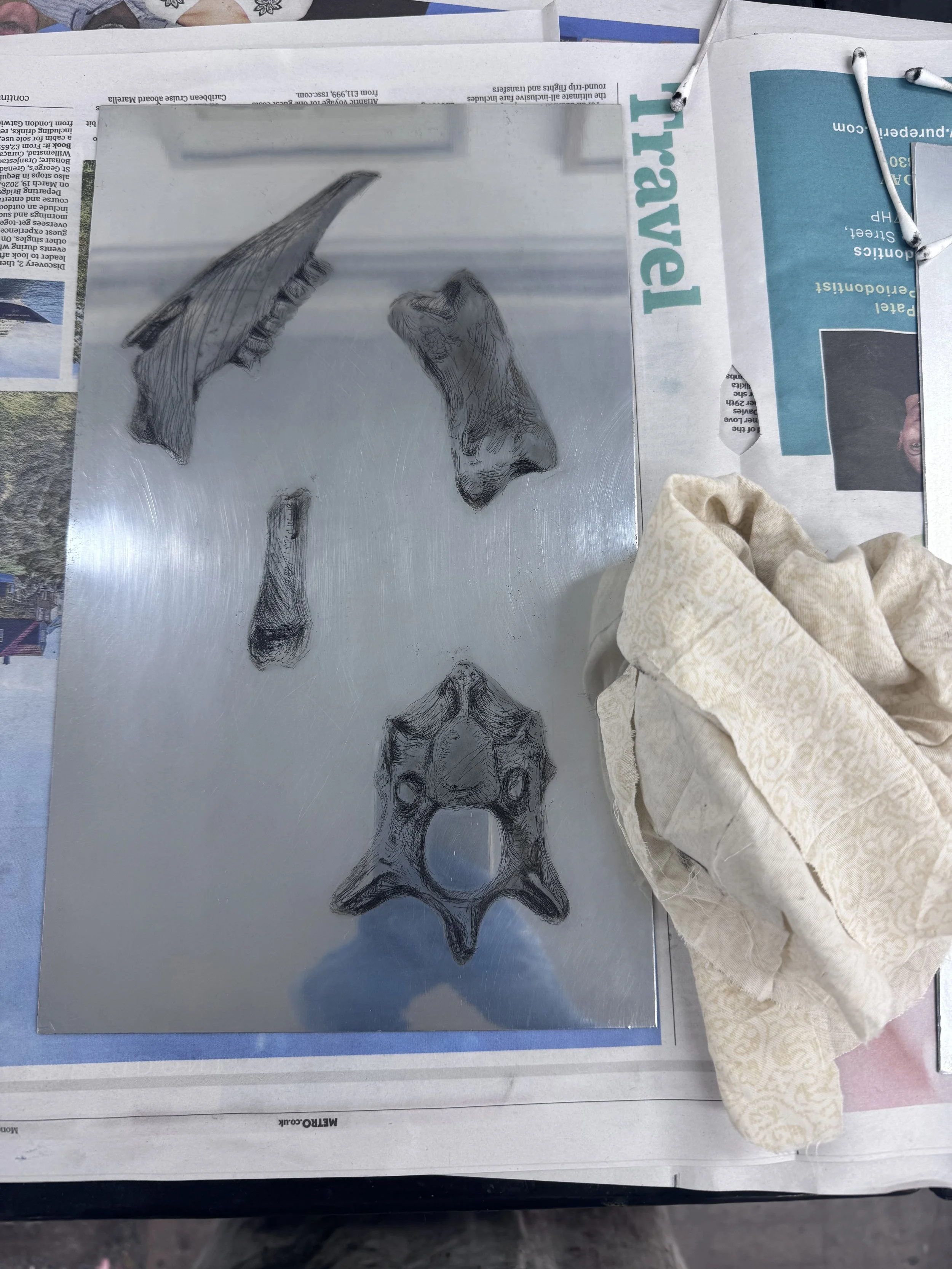
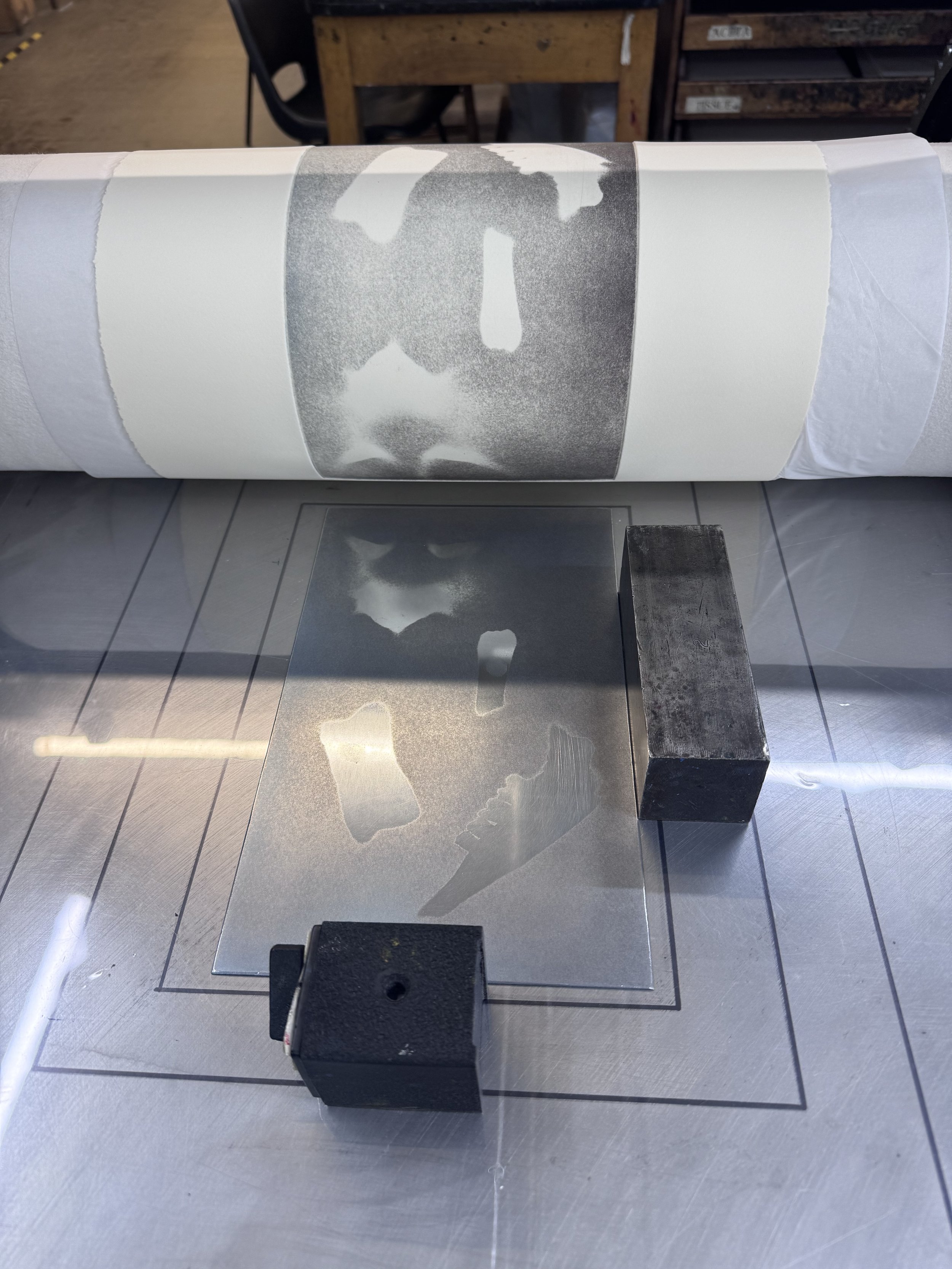
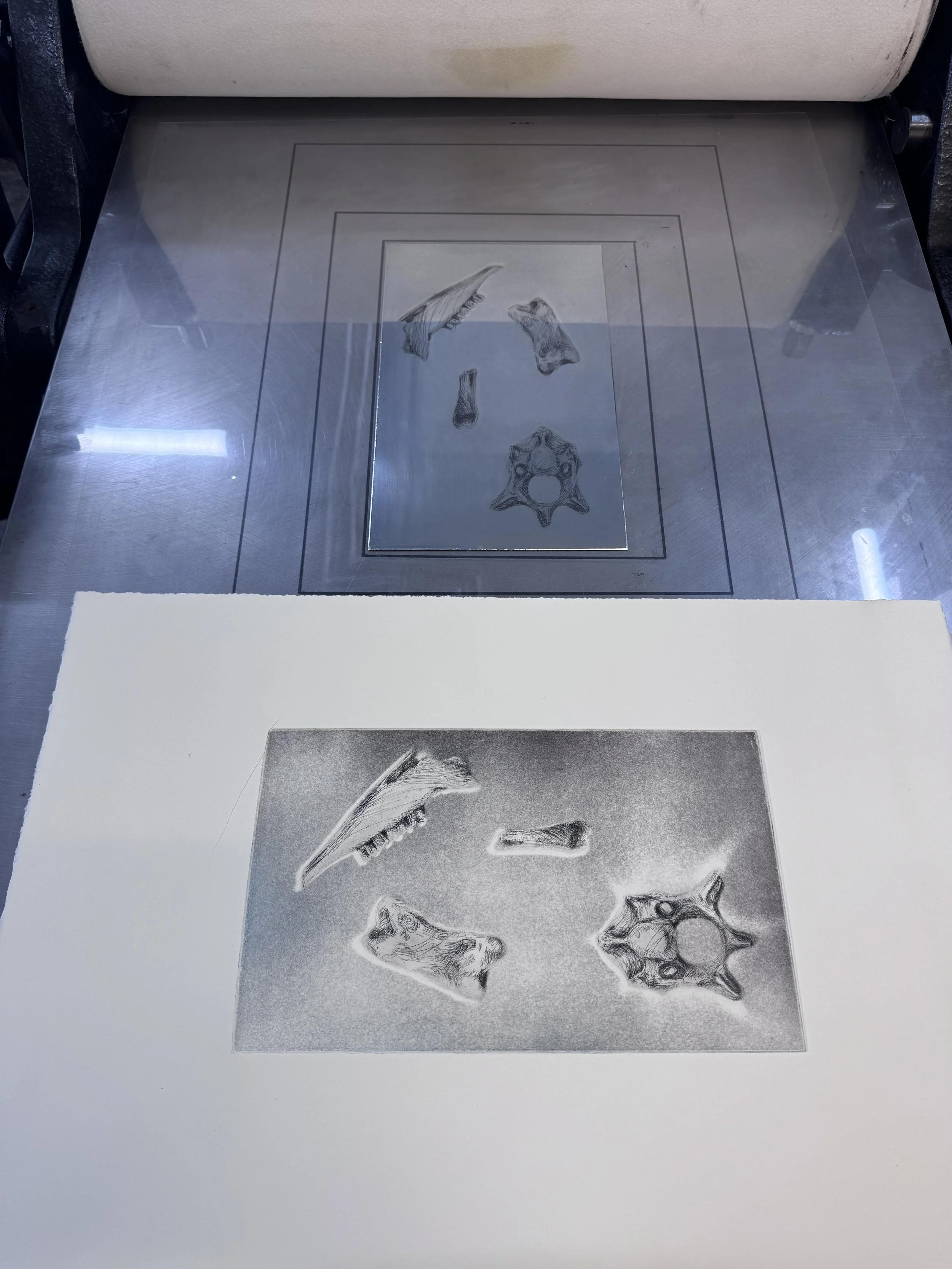
Inspired by Henry Moore’s Six Stones prints, I decided to create a two-plate print that emphasizes contrast. For the first plate, I used boxing aquatint to create the shadows of the bones, while on the second plate I drew the bones using hard ground. Printing the two plates requires precise alignment, often using metal blocks to mark the positions. This method is an excellent way to achieve different effects separately within a single print.
-
![]()
1. Degreasing the plate.
-
![]()
2. Ink up the drawing part.
-
![]()
3. Wiping the plate with tissue.
-
![]()
4. Use rag to clean the empty part.
-
![]()
5. Ink up the other plate.
-
![]()
6. Print the first plate and stock the paper then use metal block to mark the edges of the plate.
-
![]()
7. Change the plate at the same position.
-
![]()
8. Print again on the same paper.